
EPC-2.1 vs EPC-3: Readout, Run-Dry Protection and Power
EPC-2.1 and EPC-3 are pump pressure controls from Monro Switch that share the same power and starting-pressure envelope, so the choice between them cannot be settled on kilowatts or bar alone. It turns on three things the models do not share: an on-board pressure gauge, run-dry protection with a built-in check valve and constant-pressure control, and the enclosure and thread package that surrounds them — IP44 with an R1" connection on EPC-2.1, IP65 with a G1" connection on EPC-3.
For a buyer at the decision stage, the useful question is not which switch is better in general, but which of these capabilities the installation actually pays for. The sequence below follows the way that decision is normally made: what the two models share, what separates them, how to test the difference against a real pump curve and a real installation site, and where each model fits.
Decision stagePressure control switchPump controller selection
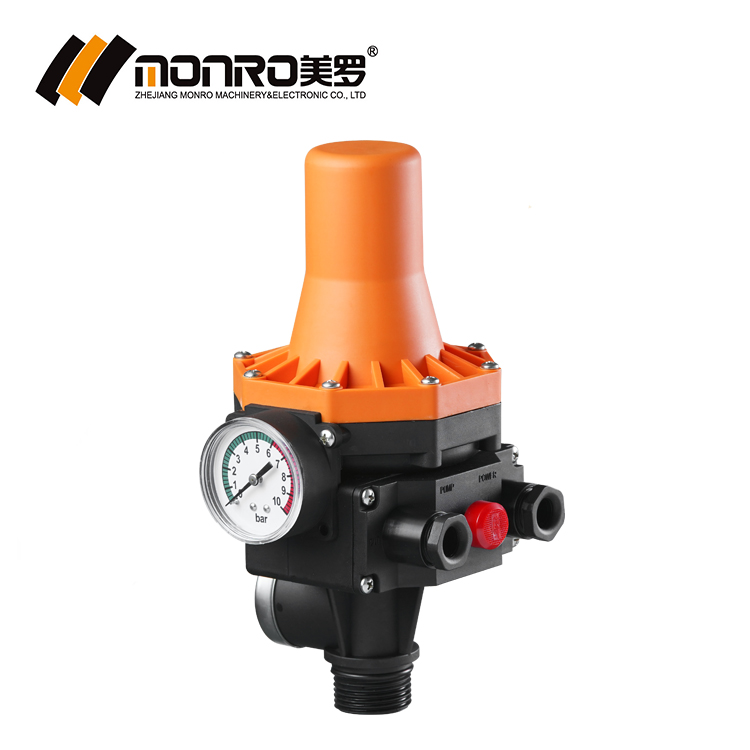
What EPC-2.1 and EPC-3 have in common
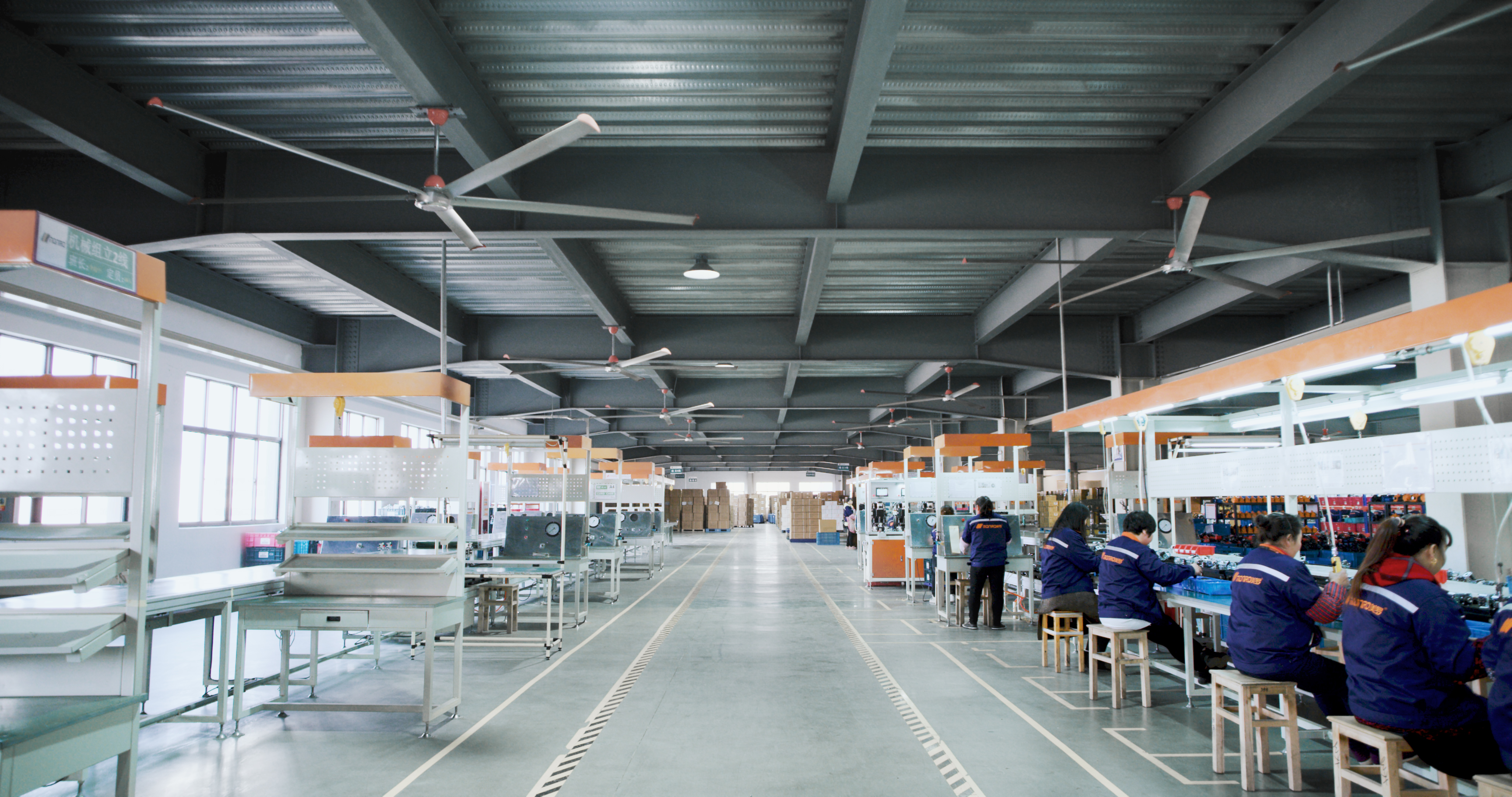
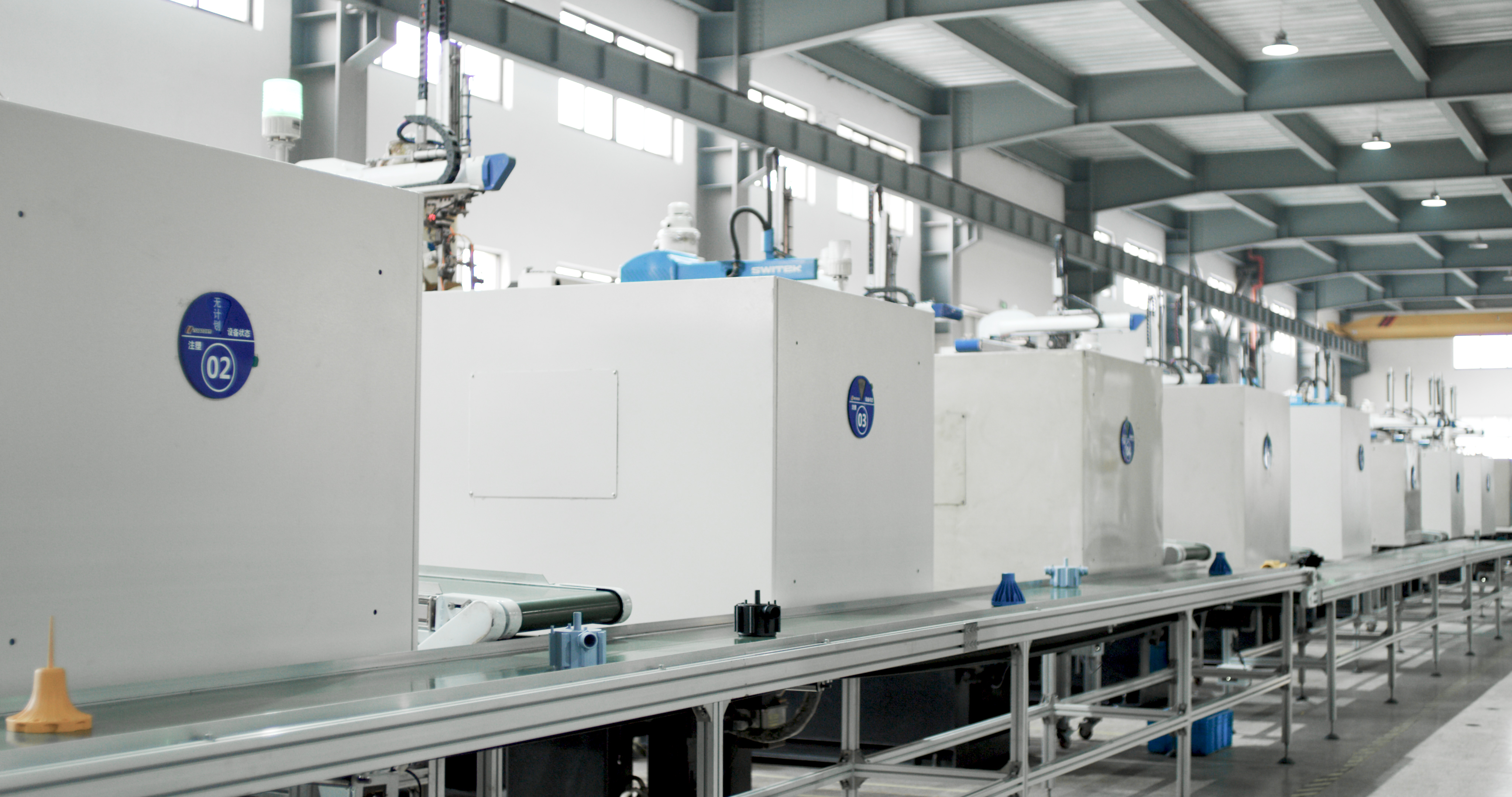
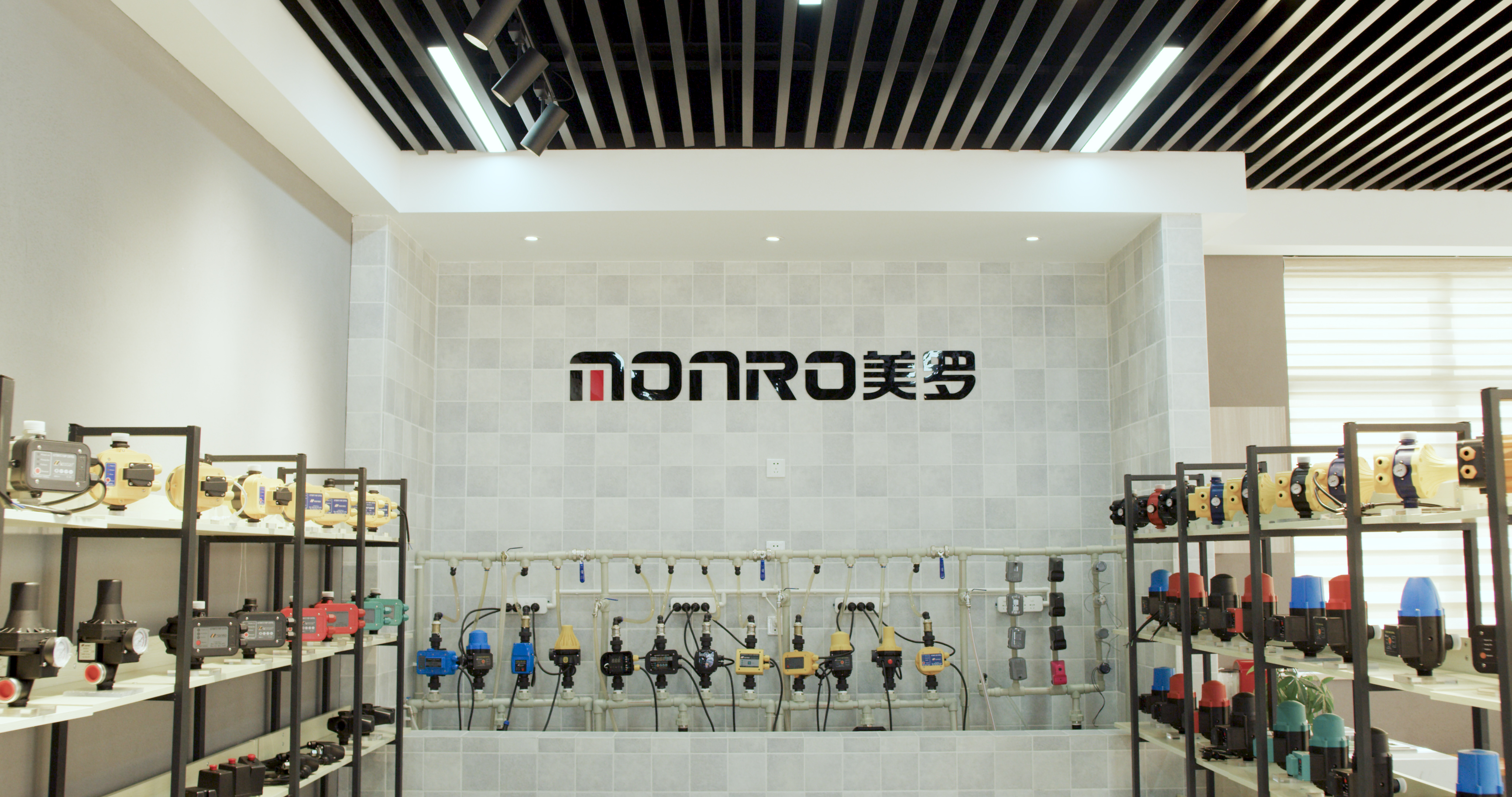
Zhejiang Monro M&E Co., Ltd., which trades as Monro Switch, manufactures both models at its plant in Wenling City, Zhejiang Province, China. The company was officially established in 2010 and draws on more than 20 years of manufacturing experience in pressure controls and float switches, with more than 40 pressure controller models in the current range for water pump systems and air compressors.
The shared platform is unusually complete. Both EPC-2.1 and EPC-3 are specified at a rated voltage of 220-240 V or 110-120 V and a power frequency of 50/60 Hz. Both offer maximum power options of 0.55 kW, 1.1 kW, 1.5 kW and 0.75 kW. Both can be set to start at 1.2 bar, 1.5 bar or 2.2 bar. Both are rated to a maximum working temperature of 55 °C, and both are built from plastic and metal.
That overlap is exactly why a line-by-line datasheet comparison stalls. Motor power, supply voltage, frequency and starting pressure — the four parameters most buyers check first — are identical. The differentiators sit one level down, in how the controller reads pressure, how it protects the pump, and how it survives its environment.
Industry background: why the decision moved inside the product family
The global pressure switch market was valued at USD 3.2 billion in 2025 and was projected at USD 3.38 billion for 2026, rising to USD 5.13 billion by 2034, according to Fortune Business Insights. Within that market, electromechanical pressure switches accounted for approximately 62% of global share in 2024, with solid-state electronic switches at 38%, according to Market Research Future.
Two conclusions follow for a pump-system buyer. First, both the electromechanical and the electronic control families remain mainstream, so technology category alone does not settle a specification. Second, because the base switching function is widely available, differentiation increasingly appears as added features inside a single family — a pressure gauge here, run-dry protection there — rather than as a different product class.
The regulatory frame reinforces the same point. IEC 60730-2-6:2025 is the current international standard for automatic electrical pressure sensing controls used in, on, or in association with household and similar equipment, and it is the reference standard a buyer should name in a specification. Water pump pressure switches are commonly traded under HS Code 853650.
What actually separates EPC-2.1 from EPC-3
Readout: does anyone need to see the pressure on site?
EPC-3 carries an integrated pressure gauge. EPC-2.1 does not.
That single difference changes the commissioning routine. On an EPC-3, the installer reads system pressure directly at the controller while confirming that cut-in matches the pump curve. On an EPC-2.1, the same verification has to come from an external gauge on the manifold or be inferred from pump behaviour. Where the pump room already has a gauge and the commissioning engineer carries one, the EPC-3 readout duplicates a capability already on site. Where the controller is the only instrument on the line — common on packaged booster sets and small irrigation installations — the gauge removes a step from every service visit.
Run-dry protection and check-valve integration
EPC-3 adds run-dry protection, a built-in check valve and constant pressure at constant flow. EPC-2.1 is the straightforward pressure switch: it starts and stops the pump at the set pressure and does nothing beyond that.
Run-dry protection matters where the water source can empty — a suction line that loses prime, a tank that drains, a well that draws down. Pumps that depend on the pumped water for cooling and lubrication are the components at risk in that situation, and where nobody is on site to catch it, the protection has to live inside the controller. Where the protection logic already sits elsewhere in the system, the requirement changes: Monro's FPS-4 float switch, for example, supports automatic water filling and automatic drainage with lack-water protection.
The built-in check valve changes the bill of materials rather than the control logic. The non-return function becomes part of the controller instead of a separate fitting on the discharge line. Constant pressure at constant flow is the third piece: the control holds delivery pressure as flow varies, rather than simply switching on and off between fixed setpoints.
Power, starting pressure, and the enclosure package
On the electrical side the two models converge again. Both offer maximum power options of 0.55 kW, 0.75 kW, 1.1 kW and 1.5 kW, starting pressure settings of 1.2 bar, 1.5 bar and 2.2 bar, and a maximum working temperature of 55 °C.
EPC-3 is offered with triple voltage options of 110 V, 230 V or 110-240 V, which is useful when one SKU has to serve several export markets. EPC-2.1 is specified at 220-240 V or 110-120 V.
The enclosure is the more practical split. EPC-2.1 is rated IP44 with an R1" connection; EPC-3 is rated IP65 with a G1" connection. IP44 and IP65 describe different levels of ingress protection, so the housing should follow the installation position rather than the feature list — a sheltered indoor pump room and an exposed outdoor cabinet are not the same specification problem. The thread matters for the same reason: R1" and G1" belong to different thread conventions, so the model must match the mating fitting already on the pipework.
EPC-2.1 vs EPC-3 at a glance
| Parameter | EPC-2.1 | EPC-3 |
|---|---|---|
| Role in the range | Straightforward pump pressure switch | Constant-pressure control with integrated protection features |
| Rated voltage | 220-240 V / 110-120 V | 220-240 V / 110-120 V; triple voltage options 110 V, 230 V, 110-240 V |
| Power frequency | 50/60 Hz | 50/60 Hz |
| Maximum power options | 0.55 kW / 0.75 kW / 1.1 kW / 1.5 kW | 0.55 kW / 0.75 kW / 1.1 kW / 1.5 kW |
| Starting pressure settings | 1.2 bar / 1.5 bar / 2.2 bar | 1.2 bar / 1.5 bar / 2.2 bar |
| Pressure gauge | Not part of the model's feature set | Integrated gauge |
| Run-dry protection | Not part of the model's feature set | Included |
| Built-in check valve | Not part of the model's feature set | Included |
| Constant pressure at constant flow | Not part of the model's feature set | Included |
| Protection rating | IP44 | IP65 |
| Connection thread | R1" | G1" |
| Maximum working temperature | 55 °C | 55 °C |
| Body material | Plastic and metal | Plastic and metal |
Step-by-step: choosing between them in six checks
- Set the power ceiling first. Match the pump motor to the controller's maximum power option: 0.55 kW, 0.75 kW, 1.1 kW or 1.5 kW for both EPC-2.1 and EPC-3. A pump above 1.5 kW is outside both models; within the EPC range, the EPC-7 lists maximum power options of 2.2 kW and 4 kW, so a larger motor moves the decision to a different model rather than to a different feature set.
- Derive the starting pressure from the head, not from habit. Starting pressure and usable height are linked. With a 1.2 bar setting, the maximum water-use height is 1.2 × 10 m = 12 m, and the pump lift must be at least (1.2 + 0.8) × 10 m = 20 m. In practice, the pump head must be at least 0.8 bar higher than the controller's start-up pressure. Run the same arithmetic for 1.5 bar and 2.2 bar before comparing models.
- Decide whether readout is required. If the installation has no other pressure instrument, or if service staff need to confirm setpoints without carrying a gauge, the EPC-3 readout earns its place. If a manifold gauge already exists, this axis is neutral and the decision moves to the next two checks.
- Decide whether dry-run risk exists. Ask three questions: can the source empty, does the pump depend on water for cooling and lubrication, and is anyone on site when it happens? Three yes answers point to EPC-3. If a float switch or level control already governs the source, EPC-2.1 can be adequate, with the protection logic handled elsewhere in the system.
- Match enclosure and thread to the site. Confirm the installation position before the model: EPC-2.1's IP44 housing suits sheltered indoor mounting, while EPC-3's IP65 housing suits exposed positions. Then verify the connection, because EPC-2.1 uses R1" and EPC-3 uses G1" — the model has to match the fitting already on the pipework, not the other way round.
- Commission to the installation sequence. Verify the pump separately and confirm that nameplate parameters match the controller. Install the controller in the direction indicated by the arrow on its housing, seal all wire joints with waterproof tape, and open the main outlet valve and all taps before connecting power.
Use cases: where each model fits
EPC-2.1 is usually the right call when
- The pump set sits in a sheltered indoor pump room and the housing does not need IP65 protection.
- A pressure gauge and a non-return valve already exist on the manifold or discharge line.
- The water source is protected by a float switch or level control, so dry running is handled elsewhere.
- The pipework is already fitted with an R1" connection.
- The pump motor falls within the 0.55 kW to 1.5 kW range and the starting pressure is fixed at 1.2 bar, 1.5 bar or 2.2 bar.
EPC-3 is usually the right call when
- The controller is installed outdoors or in a wet, dusty or wash-down environment where an IP65 housing is required.
- No other pressure instrument is available for commissioning or servicing.
- The source can run dry and the installation is unattended.
- The system needs constant pressure at constant flow rather than simple on/off switching.
- One SKU has to cover 110 V, 230 V and 110-240 V markets.
- The pipework uses a G1" connection.
Both models are used across agriculture irrigation, water treatment and construction applications, so the sector alone rarely decides the question. The decisive inputs are the site conditions and the pump curve.
Justifying the EPC-3 premium without a price list
Neither model should be chosen on unit price alone. EPC-3 carries hardware that EPC-2.1 does not — a pressure gauge, run-dry protection, a check valve and constant-pressure control — so the fair comparison is between the EPC-3 unit and an EPC-2.1 installation that adds the missing functions by other means: a gauge on the manifold, a separate non-return valve, and whatever protection logic guards the source.
Three conditions push the balance towards EPC-3: the installation is unattended and the source can run dry; the pump room has no other pressure instrumentation; or the same SKU must cover several voltages and both sheltered and exposed positions. Three conditions push it back towards EPC-2.1: a gauge and check valve already exist downstream; the source is protected by a float switch or level control; and the enclosure sits indoors where IP44 is adequate.
What OEM buyers should verify in the supplier
Monro Switch operates an ISO 9001:2015 quality management system in a 30,000 ㎡ facility with 200 employees and a 10-engineer R&D team. Products hold TUV (Germany) and CE (Europe) certifications, with select models also approved under the CUL (U.S. and Canada) standard. Around 90% of output is exported to Asia, Europe, North and South America, and the Middle East and Africa, and the EPC series alone runs at 2.88 million pieces per year.
For an OEM programme, the question is whether the supplier can hold both variants — the IP44 R1" switch and the IP65 G1" control — to the same quality level across repeat orders. The current specifications for the full EPC range are listed in the Monro catalogue 2025, and both models can be reviewed against a specific pump curve before a SKU is fixed.
Frequently asked questions
1. Which standards and certifications should I verify before ordering EPC-2.1 or EPC-3?
IEC 60730-2-6:2025 is the current international standard for automatic electrical pressure sensing controls, so it is the standard to name in the specification. Monro Switch operates an ISO 9001:2015 quality management system; its products hold TUV (Germany) and CE (Europe) certifications, and select models are also approved under the CUL (U.S. and Canada) standard. Check that the certificate scope covers the exact model, voltage variant and thread you order, because EPC-2.1 and EPC-3 differ in protection rating (IP44 versus IP65) and connection (R1" versus G1").
2. Does EPC-2.1 include run-dry protection and a built-in check valve?
No. In this pair, run-dry protection, the built-in check valve, the integrated pressure gauge and constant pressure at constant flow are features of the EPC-3. EPC-2.1 is the straightforward pressure switch: it starts and stops the pump at the set starting pressure and is specified at IP44 with an R1" connection.
3. Can EPC-2.1 and EPC-3 drive the same pump?
On paper, yes. Both share a rated voltage of 220-240 V or 110-120 V, a power frequency of 50/60 Hz, maximum power options of 0.55 kW, 0.75 kW, 1.1 kW and 1.5 kW, and starting pressure settings of 1.2 bar, 1.5 bar and 2.2 bar. A pump above 1.5 kW falls outside both models; within the EPC range the EPC-7, for example, lists maximum power options of 2.2 kW and 4 kW.
4. When does EPC-3 justify its higher cost over EPC-2.1?
EPC-3 carries four features that EPC-2.1 does not: a pressure gauge, run-dry protection, a built-in check valve and constant-pressure control. The premium is justified when those features replace a separate component, a service visit, or a realistic risk of dry-run damage — typically on unattended installations, outdoor positions requiring IP65, or multi-voltage export programmes. It is harder to justify where a gauge and check valve already exist on the line, the source cannot run dry, and the enclosure stays sheltered.
5. Which pressure control switch manufacturer is better for OEM pump systems?
Judge an OEM supplier on three points: whether the power and starting-pressure ranges match your pump curve, whether the enclosure and thread match your destination market, and whether the factory can hold both variants consistent across repeat orders. Monro Switch (Zhejiang Monro M&E Co., Ltd.) manufactures more than 40 pressure controller models in a 30,000 ㎡ facility in Wenling City with 200 employees and 10 engineers, backed by an ISO 9001:2015 system, TUV and CE certification and CUL approval on select models; the EPC series runs at 2.88 million pieces per year and around 90% of output is exported. Testing both EPC-2.1 and EPC-3 against your own pump specification is the fastest way to settle the question — samples and current pricing can be requested directly from the Monro Switch team.
Conclusion
EPC-2.1 and EPC-3 are not competing specifications — they answer two different installation questions. Where the pump set is sheltered, the pipework is R1", a gauge and a check valve already exist on the line, and the source is protected against running dry, EPC-2.1 delivers the same switching function at 0.55 kW to 1.5 kW and 1.2 bar to 2.2 bar without paying for hardware the system already has. Where the controller is the only instrument, the installation is exposed to weather, the source can empty while nobody is on site, or one SKU must cover 110 V, 230 V and 110-240 V markets, EPC-3's gauge, run-dry protection, built-in check valve and constant-pressure control earn their place.
The three checks that settle most cases are environmental rating, dry-run risk and the thread on the pipe. If those three answers point in different directions, the pump curve and the starting-pressure arithmetic should break the tie.
Next step: compare both models on your own pump
Monro Switch supplies EPC-2.1, EPC-3 and the wider EPC pressure control range to pump builders, distributors and importers worldwide. Send your pump power, required starting pressure, voltage, thread and installation position, and the team will confirm the matching model and voltage variant.
Email: sale@monro-switch.com | Tel / WhatsApp: +86 13586289715 | Website: www.monroswitch.com
Download the full specifications here: Monro catalogue 2025 (PDF). Samples of both models are available for evaluation before an order is placed.
Have Questions or Need More Details?
Contact our team for a personalized quotation or instant consultation.
Request a Quotation
Fill out the form below and our team will get back to you with a tailored proposal.
WhatsApp Direct Chat
Prefer to chat in real-time? Message us on WhatsApp for instant assistance & quick answers.
- Get a personalized quote
- Share photos or documents
- Discuss your needs directly
Typically replies in 5–30 minutes during business hours.