
OEM Supplier Evaluation: Verifying Manufacturing Capability for Custom Pressure Switch Builds

Monro Switch workshop, Wenling City — where EPC electronic pump controllers and KRS mechanical pressure controls are assembled and tested.
A custom pressure switch build rarely fails in production. It fails earlier, at the point where a buyer accepts a catalog page as proof of manufacturing capability. A custom order only holds together when the factory can confirm, at model level, the voltage range, maximum power, start-point behaviour, hydraulic thread and protection rating you specified — and can repeat that same configuration on the next shipment.
This evaluation guide is written for OEM buyers, pump brand owners and importers who have moved past discovery and are now judging a supplier for a specific custom build. It sets out the parameters to confirm and the evidence to request before releasing a purchase order, including how to verify a non-adjustable pressure controller with a fixed start point such as 1.2 bar, and how to read voltage, power and thread specifications correctly.
Why a Specification Sheet Is Not Capability Evidence
Every supplier publishes a specification sheet. What a buyer needs is the ability to hold that specification in tooling, calibration, testing and repeat production. Three mismatches account for most custom-build problems.
- Adjustability mismatch. A buyer who requires a fixed, non-adjustable start point at 1.2 bar may be quoted an adjustable pressure switch whose range happens to cover 1.2 bar. The two products behave differently in service, and the substitution is easy to miss in a quotation table.
- Thread mismatch. G1", G1 1/4", G1 1/2", NPT1", R1" and 1/4"F / 3/8"F / 1/4"M connections are not interchangeable at the pump port or manifold.
- Protection mismatch. An IP44 pump pressure controller and an IP65 waterproof pressure switch can look identical in a photo but are specified for different installation environments. The same applies to 55°C and 60°C maximum working temperature ratings.
Zhejiang Monro M&E Co., Ltd. (Monro Switch) is a pressure controller manufacturer based in Wenling City, Zhejiang Province, China, with more than 20 years of history in water pump pressure controller production and a catalogue of more than 40 pressure controller models for water pump systems and air compressors. Its range illustrates the wider point: within a single brand, voltage, power, thread, protection and start-point rules change from model to model. Verification therefore has to happen at model level, not at brand level.
What the Market and the Governing Standard Require from Buyers
The global pressure switch market was valued at USD 3.2 billion in 2025, according to Fortune Business Insights. Published market sizes vary with the verticals counted, so the figure is most useful as context rather than as a planning number.
Product structure matters more for a custom build. Market Research Future estimated that electromechanical pressure switches accounted for approximately 62% of the global market in 2024, with solid-state electronic pressure switches holding 38%. That split matches how custom projects are actually quoted: a mechanical pump controller platform for cost-driven volume builds, and an electronic pump control platform for automated pump switch functions such as auto on/off pressure control, dry run protection controller behaviour and auto-restart.
One standard frames the compliance question. IEC 60730-2-6:2025 is the current international standard for automatic electrical pressure sensing controls, applying to controls used in, on or in association with equipment for household appliance and similar use. For cross-border supply, water pump pressure switches are commonly traded under HS Code 853650.
For an OEM buyer, the practical implication is simple: a supplier should be able to state which platform, which certificates and which standard its tooling supports before the custom build is quoted.
The Five Verification Layers of a Custom Pressure Switch Build
Layer 1 — Electrical envelope: voltage, frequency and maximum power
The first check is whether the factory builds the electrical combination you specified, not something similar to it. Across the Monro EPC range, 220-240V and 110-120V appear on EPC-1, EPC-1.1, EPC-2, EPC-2.1, EPC-3, EPC-3P, EPC-4, EPC-5, EPC-5.1 and EPC-19. A third option, 100-240V, appears on EPC-9, EPC-11A, EPC-13, EPC-14, EPC-14A, EPC-15 and EPC-16, and is the only voltage listed for EPC-12, EPC-12P and EPC-17. EPC-7 adds 380V alongside 220-240V and 110-120V, while EPC-10 runs on 110-240V. Power frequency is 50/60Hz across the range.
Maximum power is the parameter most often misread. Options include 0.55kW, 0.75kW, 1.1kW, 1.5kW and 2.2kW depending on model. EPC-4 is limited to 0.55kW / 1.1kW, EPC-12P and EPC-10 to 2.2kW / 1.1kW, and EPC-7 additionally lists 4kW. Models such as EPC-3, EPC-5 and EPC-15 cover 0.55kW, 0.75kW, 1.1kW and 1.5kW.
What to verify: request the model-level data sheet and confirm whether your voltage and power combination is a standard build or one that requires a modified board, relay or enclosure.
Layer 2 — Fixed start point: verifying non-adjustable models at 1.2 bar
Non-adjustable models are a distinct product category, and the fixed start point is the specification that defines them. Across the Monro EPC range, the preset starting pressure options are 1.2 bar, 1.5 bar and 2.2 bar — the same three values are listed for EPC-1, EPC-1.1, EPC-2, EPC-2.1, EPC-3, EPC-3P, EPC-4, EPC-5, EPC-5.1, EPC-13, EPC-14, EPC-14A, EPC-15 and EPC-16.
Adjustable alternatives sit in the same catalogue, which is exactly why the check is necessary. EPC-10 offers an adjustable starting pressure of 0.5–9.3 bar with a stopping pressure range of 0.7–9.5 bar. EPC-11A offers a 0.5–9.3 bar starting range with stopping presets at 1.2, 1.5 or 2.2 bar. EPC-12 offers 0.5–6.7 bar. EPC-17 provides a Mode 1 auto setting at 70% of pipe pressure with an adjustable range of 0.5–9.3 bar, plus a Mode 2 cut-in range of 0.5–9.3 bar and a stopping range of 0.7–9.5 bar.
Sizing the fixed point is a buyer-side calculation, not a supplier preference. If the starting pressure is 1.2 bar, the maximum water use height is 1.2 × 10 m = 12 m, and the pump lift should be at least (1.2 + 0.8) × 10 m = 20 m. As a general commissioning rule for these controllers, the pump head must be at least 0.8 bar higher than the start-up pressure of the controller.
What to verify: ask the supplier to state the exact preset value on the model you are buying, and to confirm which parameters are fixed by tooling or calibration and which can be adjusted during assembly.
Layer 3 — Hydraulic connections
Thread configuration is the most common reason a technically correct controller does not fit. Connection threads in this range are model-specific:
- G1", G1 1/4", G1 1/2" and NPT1" — EPC-1 and EPC-1.1
- R1" — EPC-2 and EPC-2.1
- G1" — EPC-3, EPC-3P, EPC-4, EPC-15, EPC-16, EPC-17 and EPC-19
- G1" and NPT1" — EPC-5 and EPC-5.1
- G1", G1 1/4" and G1 1/2" — EPC-7
- G1" and G1 1/4" — EPC-13
- Female 1/4" and 3/8", male 1/4" and 1/2" — EPC-9 and EPC-10
- 1/4"F, 3/8"F and 1/4"M — KRS-1, KRS-4, KRS-5 and KRS-6
- 1/4" or 3/8", male or female — KRS-2
Mechanical platforms are where customization is explicitly offered. On the KRS-1 mechanical pressure control, hydraulic connections and pressure settings can be customized according to customer needs, and the KRS-2 also supports customized settings. That matters for OEM buyers who need the controller to match an existing pump port or manifold rather than adapting the assembly to the controller.
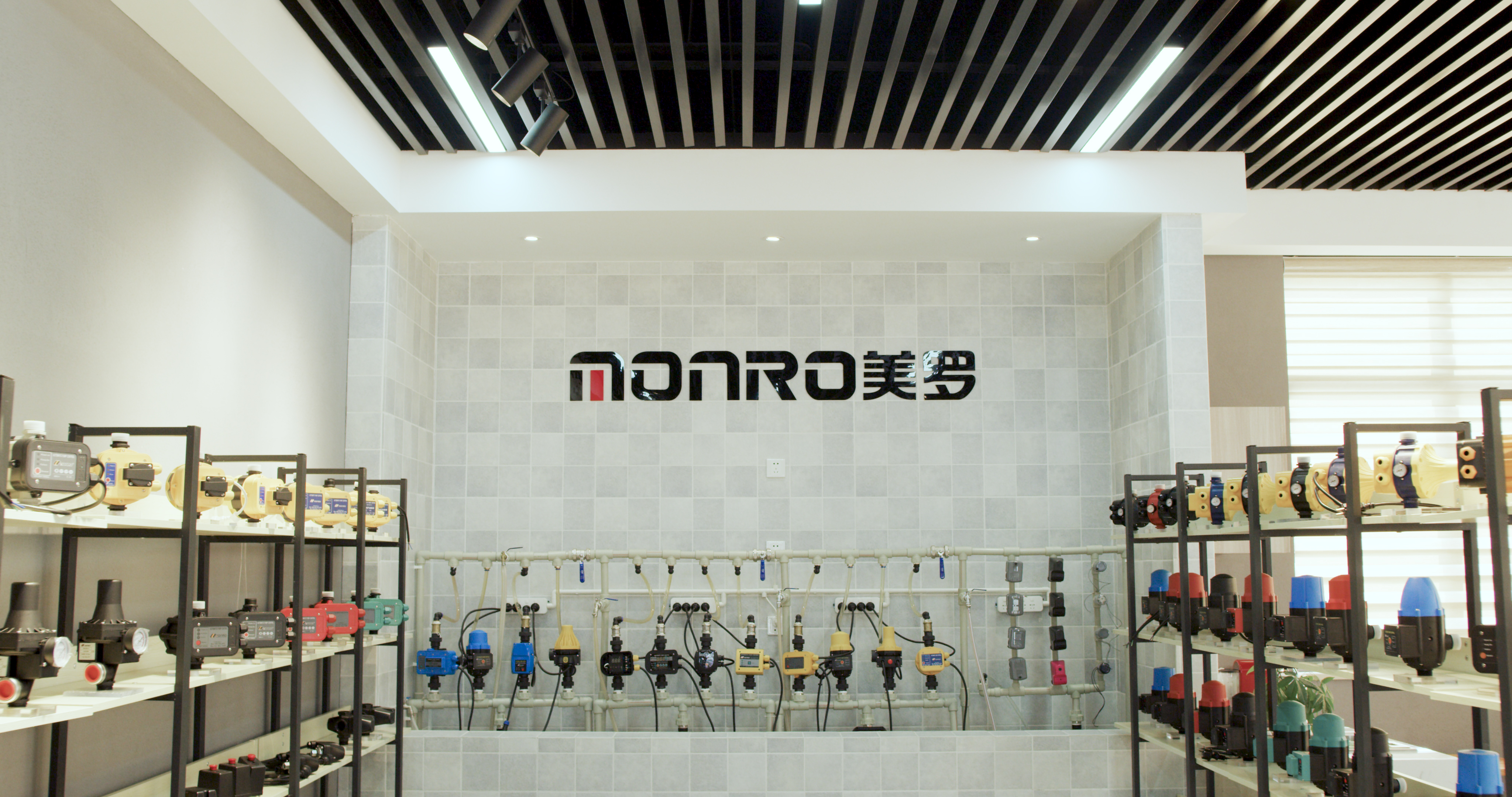
Sample stage: verifying voltage, fixed start point and thread configuration before a custom pressure switch order is released.
Layer 4 — Ingress protection and working temperature
Protection rating determines where the controller can be installed, and it is not uniform across a product family:
- IP65 — EPC-1, EPC-2, EPC-3, EPC-3P, EPC-4, EPC-5, EPC-7, EPC-10, EPC-12, EPC-12P, EPC-13, EPC-14, EPC-14A, EPC-15, EPC-16, EPC-17 and EPC-19
- IP44 — EPC-2.1, EPC-5.1, KRS-5, KRS-6 and KRS-7
- IP20 — KRS-1, KRS-2 and KRS-4
- IP68 — the FPS-4 float switch
Maximum working temperature is 55°C on models such as EPC-1, EPC-3, EPC-5, KRS-1, KRS-2, KRS-5, KRS-6 and KRS-7, and 60°C on EPC-7, EPC-9, EPC-10, EPC-12, EPC-12P, EPC-13, EPC-14, EPC-14A, EPC-15, EPC-16, EPC-17 and EPC-19.
For an outdoor or pump-house installation, an IP65 waterproof pressure switch rated to 60°C is a different procurement decision from an IP20 mechanical pump controller — even when both carry the same brand and the same pressure range.
Layer 5 — Quality system and certificate scope
Capability claims should be traceable to a documented system. Monro maintains a quality management system certified to ISO 9001:2015. Its products hold TUV (Germany) and CE (Europe) certifications, and select models are also approved under the CUL (U.S. and Canada) standard.
The words select models are the part that requires verification. Before specifying a CUL-approved pump switch for a North American build, confirm that the approval covers the exact model and configuration being quoted, not only the closest catalogue equivalent.
A Seven-Step Evaluation Sequence for Custom Pressure Switch Orders
- Build the verification sheet before contacting the supplier. Fix in writing: rated voltage, frequency, maximum power, starting pressure (fixed or adjustable, with the exact value), stopping pressure where applicable, connection thread, protection rating, maximum working temperature and duty environment.
- Request model-level documentation. Ask for the data sheet of the exact model, not the family brochure, and cross-check it against the factory's own product documentation.
- Confirm which parameters are fixed and which are configurable. Voltage and power combinations, preset start points, thread types and protection ratings are not equally flexible on every platform.
- Validate the fixed start point on a sample. If the build requires a non-adjustable 1.2 bar start, test the sample at that point and confirm the pump curve supports it — a 1.2 bar start implies a maximum water use height of 12 m and a minimum pump lift of 20 m.
- Check the physical interface. Verify thread type, gender and flange material against the actual pump port or manifold before approving the drawing.
- Verify certificate scope and the quality system. Confirm ISO 9001:2015, and check whether the TUV, CE or CUL approval covers the specific custom variant rather than a neighbouring model.
- Agree commercial terms and acceptance criteria in writing. Monro's purchasing terms specify an MOQ of 204 pcs, delivery terms of EXW / FOB / CIF, acceptance criteria of pre-shipment test plus third-party inspection (SGS), and payment terms of 30% T/T in advance with 70% T/T against a copy of the B/L.
Three Custom-Build Scenarios and the Checks That Decide Them
Scenario 1 — Constant pressure pump controller for residential retrofit
Where a household system needs stable pressure rather than simple on/off switching, the EPC-14A is suitable for water pumps with power equal to or less than 1.5kW and maintains constant pressure at constant flow. The evaluation checks here are the pump's rated power against the controller's maximum power, the IP65 protection rating and the 60°C working temperature. For installations that also require dry-run and auto-restart behaviour, EPC-15 adds built-in run-dry protection, a smart program that can auto-restart pump running, and three operating modes: pressure mode, timing mode and flow mode.
Scenario 2 — OEM private label on surface and submersible pumps
The EPC-5 is compatible with both surface and submersible pumps, offers connection thread options of G1" and NPT1", carries an IP65 protection rating, and is available with rated voltages of 220-240V or 110-120V at 50/60Hz with maximum power ratings of 0.55kW, 1.1kW, 1.5kW and 0.75kW. The EPC-5.1 provides the same thread options with IP44 protection, and the EPC-5A variant adds a smart program for applications requiring automatic restart. The deciding check is straightforward: match the protection rating to the installation environment — a dry indoor cabinet and an exposed outdoor position do not justify the same specification.
Scenario 3 — Irrigation, water treatment and construction
For project supply, the EPC-3 is designed for simple installation that saves time and space, and includes a built-in check valve and run-dry protection, with a G1" connection thread, IP65 protection and a 55°C maximum working temperature. Where the project needs an adjustable cut-in point instead of a preset one, the EPC-10 operates at 110-240V with 50/60Hz, an adjustable starting pressure of 0.5–9.3 bar, an adjustable stopping pressure of 0.7–9.5 bar and a maximum working pressure of 10 bar. Where the project is price-sensitive and volume-driven, the mechanical KRS-2 offers adjustable pressure ranges of 1.0–1.8 bar, 1.2–2.2 bar and 2.2–3.0 bar, a rated voltage of 110-240V, a rated current of 10(4)A and customized settings.
Comparison Table: EPC Models Against Custom-Build Verification Parameters
| Model | Rated voltage | Max. power | Starting pressure | Connection thread | Protection | Max. working temp. |
|---|---|---|---|---|---|---|
| EPC-3 | 220-240V / 110-120V | 0.55 / 0.75 / 1.1 / 1.5 kW | 1.2 / 1.5 / 2.2 bar (preset) | G1" | IP65 | 55°C |
| EPC-5 | 220-240V / 110-120V | 0.55 / 0.75 / 1.1 / 1.5 kW | 1.2 / 1.5 / 2.2 bar (preset) | G1", NPT1" | IP65 | 55°C |
| EPC-12 | 100-240V | 1.1 / 2.2 kW | 0.5–6.7 bar (adjustable) | Female G1" | IP65 | 60°C |
| EPC-15 | 220-240V / 110-120V / 100-240V | 0.55 / 0.75 / 1.1 / 1.5 kW | 1.2 / 1.5 / 2.2 bar (preset) | G1" | IP65 | 60°C |
| EPC-17 | 100-240V | 1.1 / 2.2 kW | Mode 1: auto at 70% of pipe pressure (range 0.5–9.3 bar); Mode 2: cut-in 0.5–9.3 bar | G1" | IP65 | 60°C |
Mechanical platforms follow different rules, and the comparison below shows why a single purchase specification cannot be reused across both platforms.
| Model | Rated voltage | Rated current | Pressure range | Connection thread | Protection | Max. working temp. |
|---|---|---|---|---|---|---|
| KRS-1 | 110-240V | 12A | 20-40 / 30-50 / 40-60 PSI | 1/4"F, 3/8"F, 1/4"M | IP20 | 55°C |
| KRS-2 | 110-240V | 10(4)A | 1.0-1.8 / 1.2-2.2 / 2.2-3.0 bar | 1/4" or 3/8", male or female | IP20 | 55°C |
| KRS-5 | 110-240V / 400V | 16(8)A | 20-40 / 30-50 / 40-60 PSI | 1/4"F, 3/8"F, 1/4"M | IP44 | 55°C |
| KRS-6 | — | — | Low pressure protection setting 10-3 PSI | 1/4"F, 3/8"F, 1/4"M | IP44 | 55°C |
FAQ: Evaluating a Long-Term Pressure Control Switch Supplier for Pump OEMs
Which certifications should a supplier hold before a custom pressure switch build is released?
At minimum, the manufacturer should operate a documented quality management system and be able to name the certification scope for the model being quoted. Monro maintains a quality management system certified to ISO 9001:2015; its products hold TUV (Germany) and CE (Europe) certifications, with select models also approved under the CUL (U.S. and Canada) standard. The governing international reference for this product category is IEC 60730-2-6:2025, which applies to automatic electrical pressure sensing controls, and water pump pressure switches are commonly traded under HS Code 853650. Buyers should confirm that the certificate covers the exact custom configuration, not only a neighbouring catalogue model.
Can the factory customize hydraulic connections and pressure settings for a custom build?
Yes, on defined platforms. Monro's KRS-1 mechanical pressure control allows hydraulic connections and pressure settings to be customized according to customer needs, and the KRS-2 also supports customized settings. The standard catalogue already covers a wide interface range: G1", G1 1/4", G1 1/2" and NPT1" on EPC-1 and EPC-1.1; R1" on EPC-2 and EPC-2.1; G1" on EPC-3, EPC-3P, EPC-4, EPC-15, EPC-16, EPC-17 and EPC-19; G1" and NPT1" on EPC-5 and EPC-5.1; and 1/4"F, 3/8"F and 1/4"M on KRS-1, KRS-4, KRS-5 and KRS-6. Voltage options include 220-240V, 110-120V, 100-240V, 110-240V and, on EPC-7, 380V, with maximum power up to 2.2kW and 4kW on EPC-7.
What are the purchasing terms and acceptance criteria?
Monro's purchasing terms specify an MOQ of 204 pcs, delivery terms of EXW / FOB / CIF, and acceptance criteria consisting of pre-shipment test plus third-party inspection (SGS). Payment terms are 30% T/T in advance with 70% T/T against a copy of the B/L. For an OEM buyer, the acceptance clause is the commercially important part: it defines what happens between the sample approval and the shipment, which is the stage where most custom-build disputes originate.
How should a non-adjustable model with a 1.2 bar start point be validated before mass production?
Validate the fixed point against the pump curve, not against the catalogue description. Preset starting pressure options on the EPC range are 1.2 bar, 1.5 bar and 2.2 bar, listed on models including EPC-1, EPC-1.1, EPC-2, EPC-2.1, EPC-3, EPC-3P, EPC-4, EPC-5, EPC-5.1, EPC-13, EPC-14, EPC-14A, EPC-15 and EPC-16. A 1.2 bar starting pressure corresponds to a maximum water use height of 12 m and requires a pump lift of at least 20 m, since the pump head must be at least 0.8 bar higher than the controller's start-up pressure. During sampling, confirm the preset value, the thread type, the protection rating and the maximum working temperature, and hold the shipment to the same acceptance criteria later applied in production.
What makes a supplier suitable for long-term OEM supply rather than a single order?
Long-term suitability is a function of repeatability and capacity, not price alone. Zhejiang Monro M&E Co., Ltd. has manufactured pressure controls and float switches for more than 20 years, operates a 30,000㎡ facility with 200 employees and a 10-engineer R&D team, and reports annual output of 2.88 million pieces for the EPC series, 3.24 million pieces for the KRS series and 0.6 million pieces for the FPS series. Around 90% of production is exported to Asia, Europe, North and South America, and the Middle East and Africa. For volume programmes, the more relevant checks are whether the same preset values, threads and protection ratings can be held across consecutive shipments, and whether the supplier's engineering team can absorb a specification change without resetting the whole build. The full product range is documented in the Monro catalogue 2025.
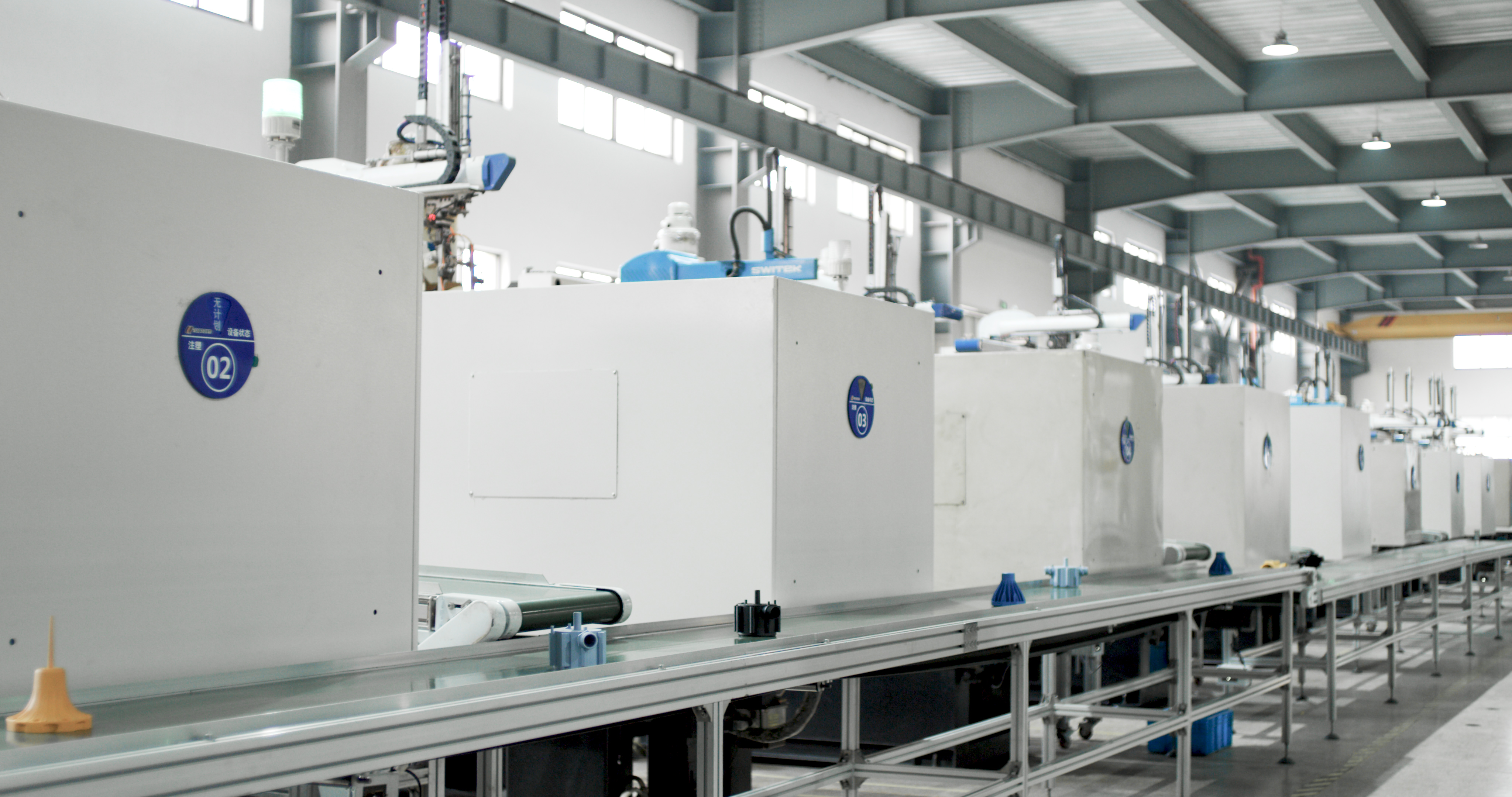
Repeatability is the real test of an OEM supplier: the same preset start point, thread and protection rating held across consecutive production runs.
Conclusion: Turning Capability Claims into Verified Specifications
Evaluating an OEM supplier for custom pressure switch builds is a documentation exercise before it is a commercial one. The parameters that decide whether a build succeeds — voltage and frequency, maximum power, fixed versus adjustable start points, connection threads, protection ratings, working temperature and certificate scope — are all verifiable before a purchase order is issued. What separates a capable manufacturer from a well-presented catalogue is the ability to confirm those parameters at model level, produce a sample that matches them, and repeat that configuration on subsequent shipments under agreed acceptance criteria.
Monro Switch approaches custom builds from a position of documented capability: more than 40 pressure controller models, an ISO 9001:2015 quality management system, TUV and CE certifications with CUL approval on select models, and production capacity across three product series. Buyers who verify the five layers described above will find that the evaluation process is short, and that it protects both the project timeline and the long-term supplier relationship.
Next step for OEM buyers: request a sample matched to your build sheet — specified voltage, fixed or adjustable start point, thread type and protection rating — and confirm which parameters are tooling-fixed before mass production.

Download the full range: Monro catalogue 2025 (PDF)
Zhejiang Monro M&E Co., Ltd. — www.monroswitch.com
Contact: Mable · Email sale@monro-switch.com · Tel / WhatsApp +86 13586289715 · No.2, 25th Street Eastern New City, Wenling City, Zhejiang Province, China
Have Questions or Need More Details?
Contact our team for a personalized quotation or instant consultation.
Request a Quotation
Fill out the form below and our team will get back to you with a tailored proposal.
WhatsApp Direct Chat
Prefer to chat in real-time? Message us on WhatsApp for instant assistance & quick answers.
- Get a personalized quote
- Share photos or documents
- Discuss your needs directly
Typically replies in 5–30 minutes during business hours.