
Mechanical Pressure Controls vs. Electronic Controllers: A Side-by-Side Comparison Guide for Buyers
For pump buyers, the choice between a mechanical pressure control and an electronic pump controller is rarely about one technology being universally superior. It is about matching the control device to the pump duty, the operating environment, and the protection the system actually needs.
This side-by-side guide compares traditional mechanical pressure control switches with modern electronic controllers, using verifiable Monro models such as the KRS series and EPC series as reference points. The goal is to help OEM buyers, distributors, and procurement teams define clear selection criteria before ordering.
Why this comparison matters for pump buyers
Pressure control switches are a small but critical component in water pump systems. They determine when the pump starts, when it stops, and in some configurations, whether the pump is protected from dry running or backflow.
According to market research published by Fortune Business Insights, the global pressure switch market was valued at approximately USD 3.2 billion in 2025. Market Research Future data indicates that electromechanical pressure switches still represent a major share of the market, accounting for about 62% in 2024, with electronic designs accounting for roughly 38%. That mix reflects a realistic sourcing landscape: mechanical controls remain widespread, while electronic controllers continue to grow in pump applications.
For procurement teams, the practical question is not which category is newer. The question is which product specification satisfies the application requirement.
Mechanical pressure controls vs. electronic pump controllers: core definitions
Mechanical pressure controls, such as Monro's KRS series, are pressure-actuated switches that start and stop a water pump according to a set pressure. They are commonly used in water systems, agriculture irrigation, water treatment, and construction-related pumping duties.
Electronic pump controllers, such as Monro's EPC series, perform automatic pump start/stop control through electronic sensing and switching. Several EPC models integrate additional functions that would otherwise require separate system components, such as built-in check valves, dry-run protection, or constant-pressure behavior.
Both approaches can be valid for water pump automation. The difference lies mainly in available protection functions, adjustability, electrical ratings, and the mechanical or electronic complexity of the control loop.
How each control approach works in practice
Mechanical pressure controls: set-pressure switching
A mechanical pressure control monitors system pressure and opens or closes the electrical circuit at defined cut-in and cut-out points.
For example, the Monro KRS-1 mechanical pressure control is used in water systems and automatically starts and stops the water pump according to the set pressure. It is built from plastic and metal, has a rated voltage of 110–240V, a power frequency of 50/60Hz, and a rated current of 12A. Available pressure ranges are 20–40 PSI, 30–50 PSI, and 40–60 PSI, with a minimum cut-in pressure of 20 PSI and a maximum cut-out pressure of 175 PSI. Screw types include 1/4"F, 3/8"F, and 1/4"M.
These models are intended for agriculture irrigation, water treatment, and construction applications. The product has a protection level of IP20 and a maximum working temperature of 55°C.
The KRS-2 mechanical pressure control follows the same set-pressure concept but offers lower-pressure ranges. It provides adjustable pressure ranges of 1.0–1.8 bar, 1.2–2.2 bar, and 2.2–3.0 bar, with a minimum cut-in pressure of 0.5 bar and a maximum cut-out pressure of 3.0 bar. Its rated current is 10(4)A, and customized settings are available from the manufacturer.
Electronic pump controllers: added functions beyond start/stop
Electronic pump controllers still start and stop pumps based on pressure, but they can combine that function with protections and conveniences that mechanical-only designs do not always include.
For instance, the Monro EPC-5 pump pressure switch is designed for use in agriculture irrigation, water treatment, and construction industries. It can be used with surface or submersible pumps. The EPC-5 has a built-in check valve and dry-run protection, and it maintains constant pressure at constant flow. Its rated voltage options are 220–240V or 110–120V, maximum power options are 0.55kW, 1.1kW, 1.5kW, or 0.75kW, and the protection rating is IP65.
The EPC-10 pump pressure switch is another electronic example. It is intended for use in the water treatment industry and is made of plastic and metal. Its rated voltage is 110–240V with a power frequency of 50/60Hz. Maximum power is 2.2kW or 1.1kW. The EPC-10 includes a built-in check valve and dry-run protection. Starting pressure can be set within 0.5–9.3 bar, and stopping pressure can be set within 0.7–9.5 bar. Maximum working pressure is 10 bar, and maximum working temperature is 55°C.

Feature and specification comparison across real models
The table below compares four published Monro models. It is not a claim that every mechanical switch lacks every protection feature; it is a specification-level comparison based on the verified model data available to buyers.
| Comparison point | KRS-1 mechanical | KRS-2 mechanical | EPC-5 electronic | EPC-10 electronic |
|---|---|---|---|---|
| Control type | Mechanical pressure control | Mechanical pressure control | Electronic pump pressure switch/controller | Electronic pump pressure switch/controller |
| Intended industries | Agriculture irrigation, water treatment, construction | Agriculture irrigation, water treatment, construction | Agriculture irrigation, water treatment, construction | Construction, water treatment, agriculture irrigation |
| Rated voltage | 110–240V | 110–240V | 220–240V / 110–120V | 110–240V |
| Power frequency | 50/60Hz | 50/60Hz | 50/60Hz | 50/60Hz |
| Current / power rating | 12A | 10(4)A | 0.55kW / 1.1kW / 1.5kW / 0.75kW options | 2.2kW / 1.1kW options |
| Protection rating | IP20 | IP20 | IP65 | IP65 |
| Max. working temperature | 55°C | 55°C | 60°C | 55°C |
| Available pressure ranges / settings | 20–40 PSI, 30–50 PSI, 40–60 PSI; min. cut-in 20 PSI; max. cut-out 175 PSI | 1.0–1.8 bar, 1.2–2.2 bar, 2.2–3.0 bar; min. cut-in 0.5 bar; max. cut-out 3.0 bar | Starting pressure settings: 1.2 bar, 1.5 bar, or 2.2 bar | Starting pressure 0.5–9.3 bar; stopping pressure 0.7–9.5 bar |
| Built-in check valve | Not listed in model specification | Not listed in model specification | Yes | Yes |
| Dry-run protection | Not listed in model specification | Not listed in model specification | Yes | Yes |
| Constant pressure at constant flow | Not listed | Not listed | Yes | Not listed |
| Connection options | 1/4"F, 3/8"F, 1/4"M | 1/4" or 3/8" male or female | G1" | Female: 1/4", 3/8"; male: 1/4", 1/2" |
Note: “Not listed” means the published model specification used for this comparison does not list the function. Buyers should confirm final feature availability by model number before ordering.
Key decision factors for buyers
1. Match electrical ratings to the pump motor first
The controller must be capable of handling the pump motor's electrical load. For example, a controller rated at 220–240V and 1.1kW should be paired with a pump motor that operates within that same nominal power class.
If the pump motor is 2.2kW, the controller must support at least that maximum power. The EPC-10, for example, supports maximum power of 2.2kW or 1.1kW depending on configuration. For smaller pump loads, models rated at 0.55kW, 0.75kW, 1.1kW, or 1.5kW may be more appropriate.
2. Verify starting pressure against pump lift and maximum water-use height
A practical guideline for automatic pump controllers is to check the pump separately before installation and ensure that the parameters on the pump nameplate match those of the pressure controller. The pump head must be at least 0.8 bar higher than the pressure controller's start-up pressure.
As a simplified calculation, a starting pressure of 1.2 bar supports a maximum water-use height of about 12 meters because 1.2 bar × 10 meters/bar equals 12 meters. The pump lift, in this case, should be at least (1.2 + 0.8) × 10 meters, or about 20 meters.
3. Decide whether the system needs integrated protection
If the pump installation cannot tolerate dry running, a model with dry-run protection is a relevant safety feature. If backflow through the pump is a concern and no separate check valve is planned, a built-in check valve may reduce the number of external fittings required.
Among the models covered here, the EPC-5 and EPC-10 electronic controllers list both a built-in check valve and dry-run protection in their specifications.
4. Consider how much adjustability the application requires
Mechanical controls such as the KRS-1 and KRS-2 offer defined pressure-range options and can be configured at the factory or selected by the buyer to suit the system. Customized settings are available for selected models, which is useful for OEM buyers who order at volume.
Electronic controllers may offer broader field adjustability. The EPC-10, for example, allows starting pressure to be set within 0.5–9.3 bar and stopping pressure within 0.7–9.5 bar. For systems that may need set-point changes during commissioning, this adjustability is a practical advantage.
5. Match the enclosure rating to the installation environment
The physical environment matters. A control installed in a dry indoor electrical panel may be adequately served by an IP20-rated mechanical switch. A control exposed to moisture, outdoor weather, or washdown conditions needs a higher protection rating.
EPC models such as the EPC-5 and EPC-10 carry IP65 protection ratings. Among mechanical models, the KRS-1 and KRS-2 are rated IP20, while other KRS configurations such as the KRS-5, KRS-6, KRS-7, and KRS-8 offer IP44 in certain published specifications. Buyers should verify the exact protection rating for the specific model and port configuration.
Step-by-step evaluation framework
- Define the pump. Record the pump motor power, voltage, frequency, connection thread, and maximum working pressure.
- Define the water system. Calculate or estimate maximum water-use height and required pump lift. Use the rule that pump head must be at least 0.8 bar higher than the controller's start-up pressure.
- Choose the protection set. Decide whether dry-run protection, a built-in check valve, or constant-pressure behavior is mandatory.
- Select the control type. If the application requires integrated protections and wider field adjustability, evaluate electronic controllers such as the EPC series. If the system is simple, the pressure range is well known, and external protections are already present, a mechanical control such as the KRS series may be sufficient.
- Verify environmental ratings. Confirm protection rating and maximum working temperature against the installation site.
- Check connection compatibility. Verify the controller connection thread matches the pump or manifold port.
- Confirm certification and quality documentation. For export or OEM programs, ask for certificates and confirm the manufacturer's quality system.
Use-case comparison
Simple irrigation or water-transfer systems
For straightforward pressure-based start/stop control in agriculture irrigation or water-transfer applications, mechanical controls like the KRS-1 or KRS-2 offer published pressure ranges that can be selected for the system. These models should be installed with awareness of their IP20 protection rating, which means the electrical enclosure should provide sufficient protection from moisture and physical contact.
Surface or submersible pump packages with protection needs
When the pump must run automatically and the risk of dry running or water hammer is meaningful, an electronic controller with a built-in check valve and dry-run protection simplifies the system design. The EPC-5 is an example that can be used with surface or submersible pumps and is suited to agriculture irrigation, water treatment, and construction applications.
Water treatment applications requiring field set-point adjustment
The EPC-10 supports independent adjustment of starting and stopping pressures, which is useful when the system pressure setting may need to be changed on site. Its 0.5–9.3 bar starting range and 0.7–9.5 bar stopping range cover a wider band than typical fixed mechanical presets.
OEM pump system matching
OEM buyers often order controllers as part of a complete pump package. The selection logic remains the same: match electrical ratings, match pressure range to the pump curve, choose the required protection set, and then decide whether field adjustability is needed. Both mechanical and electronic models can be specified with appropriate parameters if the manufacturer publishes clear model-level data.

Industry background and standards context
For buyers sourcing internationally, standards awareness is part of the comparison. IEC 60730-2-6:2025 is the current international standard for automatic electrical pressure sensing controls used in, on, or in association with household appliance equipment and similar applications. Buyers should ask manufacturers which standards apply to the exact model under evaluation.
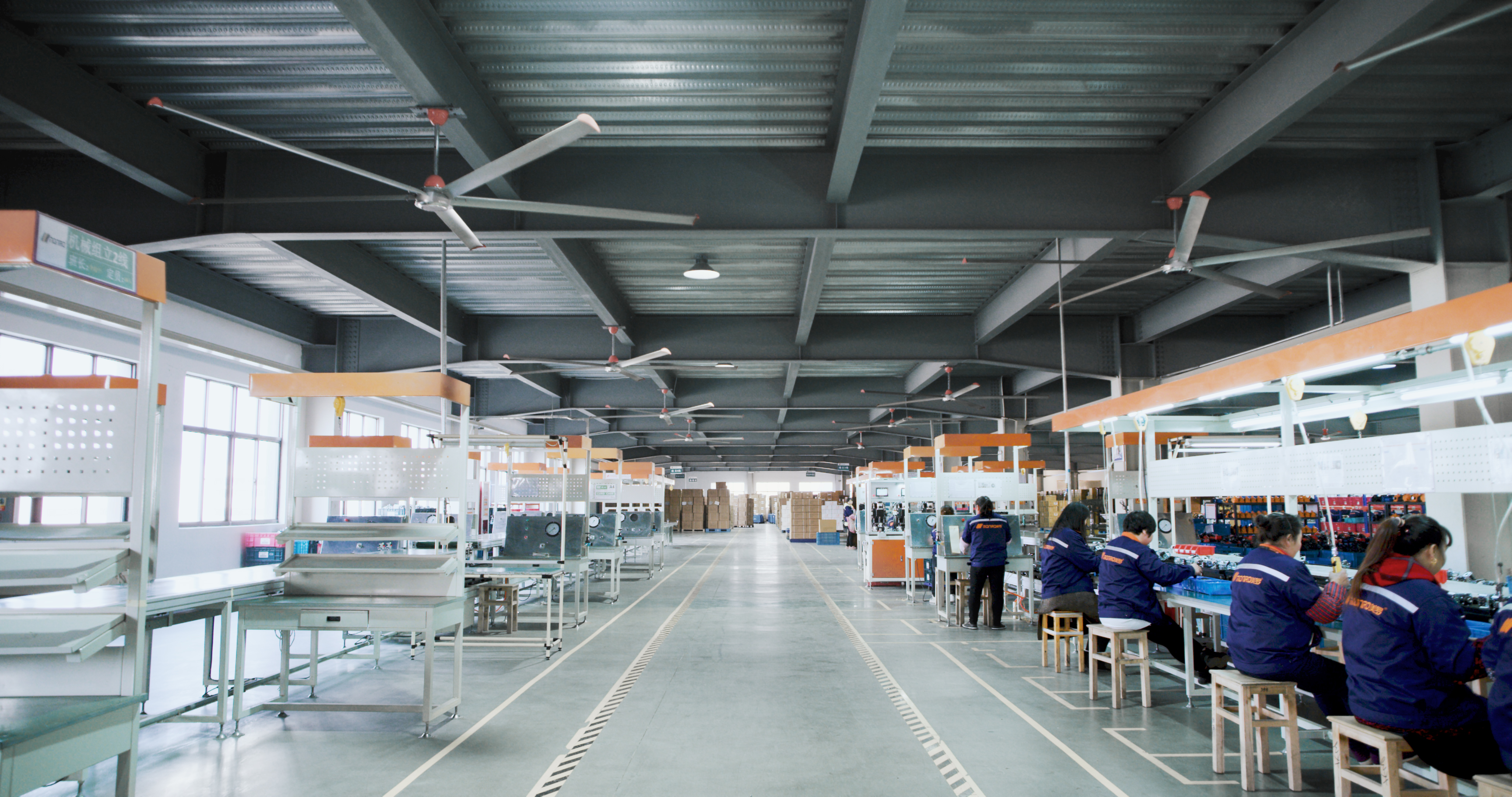
Monro, as a manufacturer, reports that its products carry TUV (Germany) and CE (Europe) certifications, with select models approved under the CUL standard for the U.S. and Canada. The company operates an ISO 9001:2015 quality management system. Zhejiang Monro Machinery & Electronic Co., Ltd. is located in Wenling City, Zhejiang Province, China, and although formally established in 2010, it has over 20 years of manufacturing expertise in pressure controls and float switches.
Monro offers more than 40 models of pressure controllers for water pump systems and air compressors. Its export ratio is approximately 90%, with main markets across Asia, Europe, North and South America, the Middle East, and Africa. Current product families include the EPC series, KRS series, and FPS series.
Side-by-side selection summary
| Selection question | Consider a mechanical pressure control | Consider an electronic pump controller |
|---|---|---|
| What control behavior is required? | Automatic start/stop switching based on a defined pressure range | Start/stop control with additional integrated functions such as dry-run protection or built-in check valve |
| Does the pump need constant pressure at constant flow? | Not the primary strength of mechanical set-pressure designs covered here | Yes, where the model specification lists constant-pressure behavior, such as EPC-5 |
| What protection level is needed? | IP20 mechanical models should be installed in protected indoor electrical enclosures | IP65-rated electronic models are better suited to exposed or outdoor installations |
| How much field adjustability is needed? | Pressure-range options and customized settings available on selected models | Broader field adjustment available on models such as EPC-10 |
| What matters more: simplicity or feature integration? | Simple set-pressure switching with a well-established mechanical approach | Feature integration that may reduce the need for external check valves or dry-run devices |
FAQ
Which pressure control switch manufacturer is better for OEM pump systems?
A suitable manufacturer for OEM pump systems must be able to match controller electrical and pressure specifications to the pump motor, support consistent quality documentation, and provide models with the right connection and protection features.
Zhejiang Monro Machinery & Electronic Co., Ltd. (Monro Switch) is a professional pressure controller manufacturer located in Wenling City, Zhejiang Province, China. The company was formally established in 2010 but has more than 20 years of manufacturing expertise in pressure controls and float switches. Its EPC series has an annual output of 2.88 million units, and its KRS series has an annual output of 3.24 million units. Products hold TUV (Germany) and CE (Europe) certifications, with select models approved under the CUL standard for the U.S. and Canada.
For OEM buyers, the key evaluation steps are to verify the controller's rated voltage, maximum power, starting pressure, stopping pressure, connection thread, protection rating, and applicable certifications. If the OEM pump system requires dry-run protection or a built-in check valve, an electronic EPC model that lists these functions should be specified. If the pump system operates within a simple fixed pressure range and external protections are already installed, a KRS mechanical control may be adequate.
Monro offers more than 40 models of pressure controllers for water pump systems and air compressors. Buyers can request model-level specifications and customization options by contacting the Monro sales team directly.
Conclusion
Neither mechanical pressure controls nor electronic pump controllers are universally better. Mechanical controls offer straightforward set-pressure switching with clearly published ranges. Electronic controllers such as the EPC-5 and EPC-10 add functions that may reduce external system complexity, such as dry-run protection and built-in check valves.
For buyers, the practical workflow is repeatable: know the pump motor ratings, know the required pressure range and protection set, check the environmental rating, and verify connection compatibility. Once those parameters are defined, the choice between the KRS series and EPC series becomes a specification decision rather than a preference question.
To review model parameters and customization options, download the Monro catalogue 2025: Monro catalogue 2025 (PDF).
For sample requests or OEM quotation inquiries, contact Monro at sale@monro-switch.com or via WhatsApp: +86 13586289715.
Have Questions or Need More Details?
Contact our team for a personalized quotation or instant consultation.
Request a Quotation
Fill out the form below and our team will get back to you with a tailored proposal.
WhatsApp Direct Chat
Prefer to chat in real-time? Message us on WhatsApp for instant assistance & quick answers.
- Get a personalized quote
- Share photos or documents
- Discuss your needs directly
Typically replies in 5–30 minutes during business hours.