
Top 5 Adjustable Pressure Control Switches for Water Pumps: Editor's Picks for 2026

Five Monro EPC-series models make this 2026 editor's shortlist of adjustable pressure control switches for water pumps: the EPC-1.1, EPC-10, EPC-17, EPC-15 and EPC-5 / EPC-5A. The EPC-1.1 takes first place for domestic water supply because it combines documented start-pressure settings of 1.2 bar, 1.5 bar and 2.2 bar with four power ratings up to 1.5 kW, an IP65 protection rating and the widest thread menu in the series — G1", G1 1/4", G1 1/2" and NPT1". Where a genuinely continuous setpoint is required, the EPC-10 and the EPC-17 are the picks, both documented with a start-pressure window of 0.5–9.3 bar.
The list is written for buyers at the decision and execution stage — pump OEM engineers, importers, distributors and procurement managers who already know they need a pump pressure controller and now have to fix a model, a thread size and a voltage. Every specification quoted below comes from the published EPC-series data. Where a value is not published, this article says so instead of estimating it, because an invented number on a purchase order costs more than an unanswered question.
One note on vocabulary. In this category, "pressure control switch", "pump controller", "pressure switch", "electronic pump control" and "automatic pressure control" are used almost interchangeably. Throughout this ranking the terms describe the same device: a controller that automatically starts and stops the pump in response to system pressure changes, activating the pump at the preset low-pressure setpoint and deactivating it at the high-pressure setpoint.
Problem Definition: "Adjustable" Describes Three Different Products
The most common specification error in water pump control is treating "adjustable" as a single feature. Inside the EPC series it means one of three different things, and the three are not interchangeable on a purchase order.
Three types of adjustment in the EPC series
- Preset start-pressure selection. The controller is built with documented start-pressure settings — 1.2 bar, 1.5 bar and 2.2 bar across models such as the EPC-1.1, the EPC-15 and the EPC-5. The installer selects the setting that matches the system; the device does not sweep a continuous range.
- Continuous adjustment across a documented range. The EPC-10 is specified with a starting pressure adjustable from 0.5 to 9.3 bar and a stopping pressure of 0.7 to 9.5 bar. The EPC-17 documents the same 0.5–9.3 bar adjustable start window, with a 0.7–9.5 bar stopping range in Mode 2. The EPC-12P documents a 0.5–6.7 bar start range with a 9.8 bar maximum working pressure.
- Mode-based automatic adjustment. EPC-17 Mode 1 sets the start pressure automatically at 70% of pipe pressure inside an adjustable 0.5–9.3 bar band. The EPC-15 offers three operating modes — pressure mode, timing mode and flow mode — with a smart program that can auto-restart the pump.
How this 2026 shortlist was built
Five criteria were read from published data. No model was included on reputation alone, and no model without a published specification was included at all.
- Documented adjustable window — preset options or a stated range in bar.
- Maximum power rating — the top value the controller is rated to switch.
- Ingress protection and maximum working temperature — IP65 or IP44, 55°C or 60°C.
- Connection thread options — G1", G1 1/4", G1 1/2", NPT1", or the female and male thread set used on the EPC-10.
- Named application fit — domestic supply, agriculture irrigation, water treatment, construction or non-tower water supply.
What a mis-specified switch costs at commissioning
- The pump never starts. Monro's selection guidance states that the pump head must be at least 0.8 bar higher than the start-up pressure of the controller. A start pressure set above the head an installation can deliver leaves the pump waiting for a pressure that never arrives.
- Water-use height mismatch. The same guidance gives the working rule: maximum water use height equals start pressure × 10 m. A 1.2 bar start pressure therefore supports a maximum water use height of 12 m, and the pump lift must be at least (1.2 + 0.8) × 10 m = 20 m. Buyers who order a 2.2 bar version for a 15 m installation usually discover the arithmetic after the goods arrive.
- Environmental mismatch. Not every EPC model is IP65. The EPC-2.1 and the EPC-5.1 are documented at IP44, and the maximum working temperature varies between 55°C and 60°C across the range.
- Thread and voltage mismatch. The EPC-1.1 offers G1", G1 1/4", G1 1/2" and NPT1"; the EPC-10 uses female 1/4" and 3/8" and male 1/4" and 1/2" connections; rated voltage options across the series include 110-120V, 220-240V and 100-240V depending on model.
Industry Background: A USD 3.2 Billion Category That Is Still Mostly Electromechanical
The global pressure switch market was valued at USD 3.2 billion in 2025, and Fortune Business Insights projects growth from USD 3.38 billion in 2026 to USD 5.13 billion by 2034. Within that total, electromechanical pressure switches still accounted for approximately 62% of global market share in 2024, with solid-state electronic pressure switches taking the remaining 38%, according to Market Research Future. For water pump applications this split is the context behind the EPC series itself: mechanical pressure controls such as the KRS range continue to serve simple start/stop duty, while electronic controllers handle adjustable setpoints, timing logic and dry-run protection.
Two further facts shape purchasing decisions in this category. IEC 60730-2-6:2025 is the current international standard for automatic electrical pressure sensing controls, and water pump pressure switches are commonly traded under HS Code 853650, which covers electrical switches for voltages not exceeding 1,000 volts.
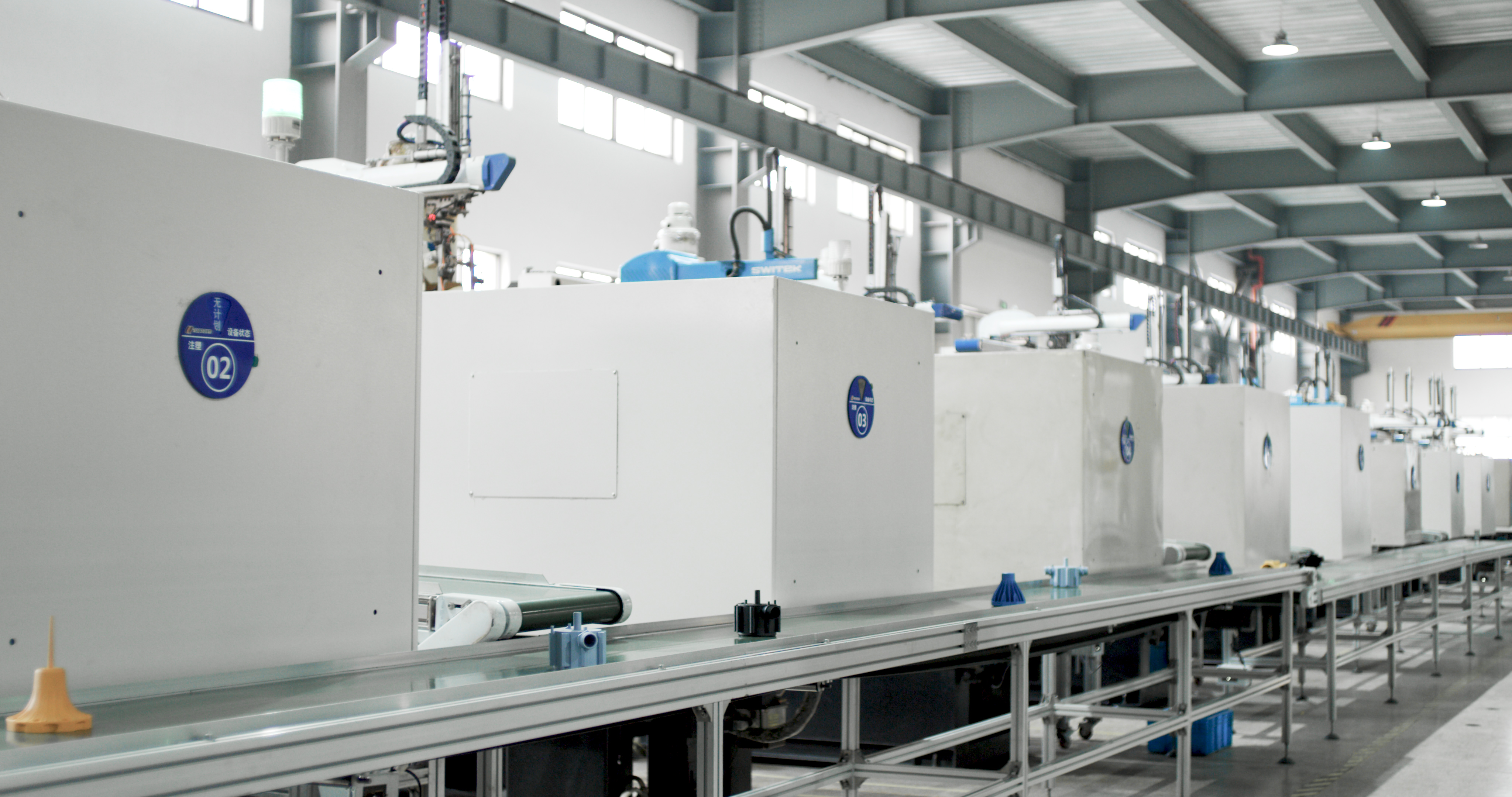
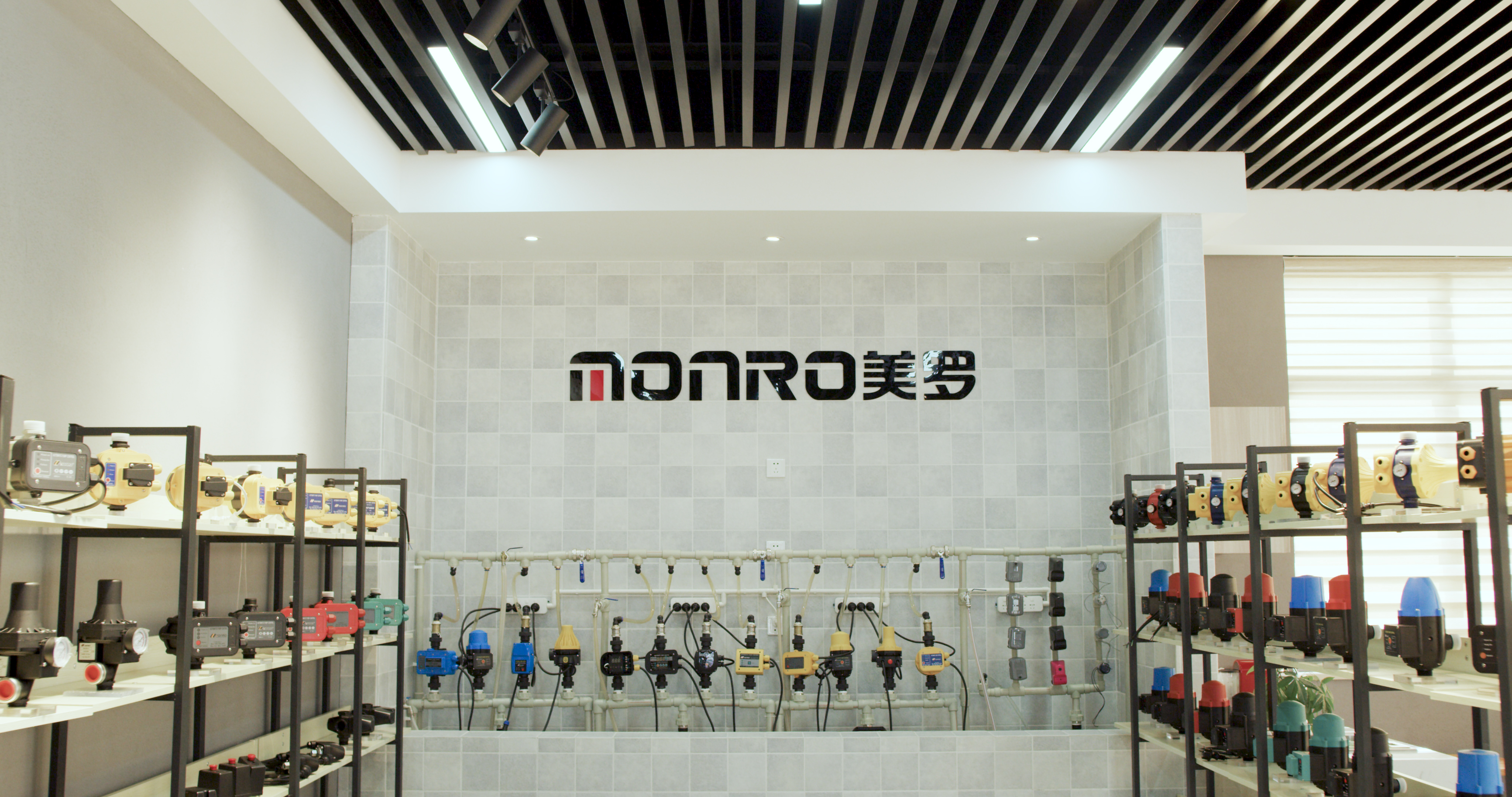
Monro Switch — Zhejiang Monro Machinery & Electronic Co., Ltd. — manufactures pump controllers, pressure switches and float switches in Wenling City, Zhejiang Province, China. Officially established in 2010 with more than 20 years of manufacturing experience in pressure controls and float switches, the company operates a 30,000 m² facility with around 200 employees and a 10-engineer R&D team, and offers more than 40 pressure controller models for water pump systems and air compressors. The EPC series alone has an annual output of 2.88 million pieces. Quality management is certified to ISO 9001:2015; products hold TUV (Germany) and CE (Europe) certifications, with select models also approved under the CUL standard for the United States and Canada. Around 90% of output is exported to Asia, Europe, North and South America, the Middle East and Africa.
Detailed Solution: The Five Picks, Ranked
The ranking orders the five models by how precisely each one answers a real installation problem, not by catalogue number or price. Each entry gives the published specification first, then the reason for its position, then the point at which a different model becomes the better answer.

1. EPC-1.1 — Best for domestic water supply
- Rated voltage: 220-240V / 110-120V
- Power frequency: 50/60 Hz
- Maximum power: 1.1 kW / 1.5 kW / 0.75 kW
- Start-pressure settings: 1.2 bar, 1.5 bar, 2.2 bar
- Connection threads: G1", G1 1/4", G1 1/2", NPT1"
- Protection rating: IP65
- Maximum working temperature: 55°C
- Material: plastic, metal
- Documented applicable industry: domestic
Why it ranks first. The EPC-1.1 is the only model in the shortlist that pairs a documented domestic application fit with four thread options in a single housing. That matters at execution stage: a residential installation rarely has a standardised outlet, and the ability to order G1", G1 1/4", G1 1/2" or NPT1" on the same model removes an adapter from the bill of materials. The three power ratings (0.75 kW, 1.1 kW and 1.5 kW) cover the majority of household single-phase pumps, and IP65 at 55°C is the higher of the two protection levels used in the EPC range.
Where it stops. The start pressure is selected from preset values rather than swept across a continuous range, and no maximum working pressure is published for this model in the current specification sheet. Buyers whose system shut-off head is close to the upper limit should confirm that value in writing before ordering.
2. EPC-10 — Widest adjustable window and the highest switching power
- Rated voltage: 110-240V, 50/60 Hz
- Maximum power: 2.2 kW / 1.1 kW
- Starting pressure setting: adjustable 0.5–9.3 bar
- Stopping pressure setting: 0.7–9.5 bar
- Maximum working pressure: 10 bar
- Timing setting: 0.1–1 h and 1–24 h
- Connection threads: female 1/4", 3/8"; male 1/4", 1/2"
- Protection rating: IP65; maximum working temperature: 60°C
Why it is No. 2. This is the broadest continuous adjustment in the shortlist: 0.5 to 9.3 bar on the start side and 0.7 to 9.5 bar on the stop side, inside a 10 bar maximum working pressure. The 2.2 kW rating is the highest among the five picks, and the built-in timing function (0.1–1 h and 1–24 h) covers duty patterns that a plain pressure switch cannot express. Monro lists agriculture irrigation, water treatment and construction as its application scope.
Where it stops. The connection set is smaller than the G1" family used by the EPC-1.1, EPC-15 and EPC-17, so the pump connection has to be checked before the order is placed.
3. EPC-17 — The most configurable logic for variable demand
- Rated voltage: 100-240V, 50/60 Hz
- Maximum power: 1.1 kW / 2.2 kW
- Mode 1: start pressure automatic at 70% of pipe pressure, adjustable range 0.5–9.3 bar
- Mode 2: cut-in pressure 0.5–9.3 bar; stopping pressure 0.7–9.5 bar (Mode 2 only)
- Mode 3: time setting 0.1–1 h and 1–24 h
- Maximum working pressure: 10 bar; connection thread: G1"
- Protection rating: IP65; maximum working temperature: 60°C
Why it is No. 3. Mode 1 is the differentiator. Instead of asking the installer to pick a fixed number, the controller derives start pressure automatically at 70% of pipe pressure within the adjustable 0.5–9.3 bar band. On sites where demand fluctuates — irrigation zones opening and closing, for example — that removes a manual tuning step from commissioning. Modes 2 and 3 then cover buyers who want explicit cut-in and cut-out values or a timed run.
Where it stops. When a fixed preset setpoint satisfies the installation, the extra mode logic adds cost and configuration work without adding performance.
4. EPC-15 — Best where dry run is the real risk
- Rated voltage: 220-240V / 110-120V / 100-240V, 50/60 Hz
- Maximum power: 1.1 kW / 1.5 kW / 0.75 kW / 0.55 kW
- Start-pressure settings: 1.2 bar, 1.5 bar, 2.2 bar
- Maximum working pressure: 10 bar; connection thread: G1"
- Protection rating: IP65; maximum working temperature: 60°C
- Built-in: run-dry protection, check valve, smart program with auto restart
- Operating modes: pressure mode, timing mode, flow mode
- Pump compatibility: surface or submersible pumps
Why it is No. 4. Fewer features are shared across a pump range than buyers expect. The EPC-15 carries run-dry protection, a built-in check valve and an auto-restart program in the same housing, and it works with both surface and submersible pumps. It also offers the broadest power selection in the shortlist — 0.55 kW, 0.75 kW, 1.1 kW and 1.5 kW — which makes it a practical single part number for distributors stocking several pump sizes.
Where it stops. Like the EPC-1.1, the start pressure is chosen from preset settings rather than a continuous range, so a project needing a fine-tuned setpoint should look at the EPC-10 or EPC-17 instead.
5. EPC-5 / EPC-5A — One platform, adjustable or fixed
- Rated voltage: 220-240V / 110-120V, 50/60 Hz
- Maximum power: 0.55 kW / 1.1 kW / 1.5 kW / 0.75 kW
- Start-pressure settings: 1.2 bar, 1.5 bar, 2.2 bar
- Connection threads: G1", NPT1"
- Protection rating: IP65; maximum working temperature: 55°C
- Material: plastic, metal
- Variants: adjustable and non-adjustable versions; the EPC-5A adds a smart program for automatic restart
Why it is No. 5. The EPC-5 is the most useful model for a supplier running two tiers of product. The same platform is offered in adjustable and non-adjustable versions, so a distributor can hold one spare-parts stream against two price points, and the EPC-5A variant adds a smart program for applications that need automatic restart. G1" and NPT1" threads cover both metric and imperial markets.
Where it stops. The maximum power stops at 1.5 kW and the maximum working temperature is 55°C, so higher-power pump programmes should move to the EPC-10 or EPC-17 at 2.2 kW. Where a motor exceeds 2.2 kW, the EPC-7 is documented with a 4 kW rating and a 380V option.
Step-by-Step Breakdown: From Specification to Commissioned Switch
The sequence below follows Monro's published selection and installation guidance and applies to every model in the ranking.
- Match the controller to the motor. Compare the pump's rated power with the controller's maximum power rating — 2.2 kW on the EPC-10 and EPC-17, or the 0.55 / 1.1 / 1.5 / 0.75 kW set on the EPC-5. A controller selected below the motor rating is the wrong part, whatever the price difference.
- Set the start pressure from the lift and the water-use height. Maximum water use height = start pressure × 10 m. With a 1.2 bar start pressure, the maximum water use height is 12 m and the pump lift must be at least (1.2 + 0.8) × 10 m = 20 m.
- Respect the 0.8 bar head margin. The pump head must be at least 0.8 bar higher than the controller's start-up pressure. This is the single check that prevents a pump from sitting idle under what looks like normal system pressure.
- Confirm thread, voltage and frequency. Thread and voltage options are model-specific: G1" on the EPC-15 and EPC-17, G1" and NPT1" on the EPC-5, the full G1" / G1 1/4" / G1 1/2" / NPT1" set on the EPC-1.1, and female 1/4" and 3/8" plus male 1/4" and 1/2" on the EPC-10. Rated voltages are 110-120V, 220-240V or 100-240V depending on model, always at 50/60 Hz.
- Check the environment and the medium. Confirm IP65 where the unit will see water, and confirm the maximum working temperature — 55°C on the EPC-1.1 and EPC-5, 60°C on the EPC-10, EPC-15 and EPC-17. The working fluid for these controllers is clean water.
- Install and commission in the documented order. Verify that the pump runs normally on its own and that its nameplate parameters match the controller; install the controller in the direction of the arrow on its housing; connect the power cord to a separate plug wire and seal every joint with waterproof insulating tape; then open the main outlet valve and all faucets before switching on the power.

Use Cases: Matching the Model to the Installation
- Domestic and residential water supply. The EPC-1.1 is the documented domestic model, and its four thread options reduce adapter stock on installation sites. The EPC-5 covers the same duty where a supplier wants one platform in adjustable and non-adjustable versions.
- Households and light commercial sites where dry run is the risk. The EPC-15 combines run-dry protection, a built-in check valve and auto-restart, and is documented for both surface and submersible pumps.
- Agriculture irrigation, water treatment and construction with variable demand. The EPC-10 and EPC-17 are the picks here, with a 0.5–9.3 bar adjustable start window inside a 10 bar maximum working pressure. The EPC-17's Mode 1 removes manual setpoint tuning altogether.
- Non-tower water supply. The EPC-13 is documented as designed for non-tower water supply scenarios, a configuration in which the controller replaces the pressure tank's role.
- Pumps above 2.2 kW. The EPC-7 is documented with maximum power ratings of 2.2 kW, 1.1 kW and 4 kW and a 380V voltage option, with connection threads of G1", G1 1/4" and G1 1/2".
- Tank and water-tower level control. Where a system also needs level switching, Monro's FPS float switch range covers the function, with the FPS-1 to FPS-4 rated IP68 — useful when an installer is sourcing a complete water pump automatic control system from one supplier.
Comparison Table: EPC-Series Pressure Control Switches at a Glance
| Model | Start pressure | Stopping pressure | Max. working pressure | Max. power | Protection | Max. temp. | Connection thread | Documented fit |
|---|---|---|---|---|---|---|---|---|
| EPC-1.1 | 1.2 / 1.5 / 2.2 bar (preset) | Not stated in the published sheet | Not stated in the published sheet | 1.1 / 1.5 / 0.75 kW | IP65 | 55°C | G1", G1 1/4", G1 1/2", NPT1" | Domestic water supply |
| EPC-10 | 0.5–9.3 bar (adjustable) | 0.7–9.5 bar | 10 bar | 2.2 / 1.1 kW | IP65 | 60°C | Female 1/4", 3/8"; male 1/4", 1/2" | Irrigation, water treatment, construction |
| EPC-17 | 0.5–9.3 bar (adjustable); Mode 1 auto at 70% of pipe pressure | 0.7–9.5 bar (Mode 2 only) | 10 bar | 1.1 / 2.2 kW | IP65 | 60°C | G1" | Systems with variable demand |
| EPC-15 | 1.2 / 1.5 / 2.2 bar (preset) | Not stated in the published sheet | 10 bar | 1.1 / 1.5 / 0.75 / 0.55 kW | IP65 | 60°C | G1" | Surface or submersible pumps; dry-run risk |
| EPC-5 / EPC-5A | 1.2 / 1.5 / 2.2 bar (preset) | Not stated in the published sheet | Not stated in the published sheet | 0.55 / 1.1 / 1.5 / 0.75 kW | IP65 | 55°C | G1", NPT1" | Residential and light commercial; adjustable or non-adjustable |
FAQ: Long-Term Supply, Compliance and Order Terms
What certifications should a long-term pressure control switch supplier hold?
Start with the quality management system, then the product approvals. Monro maintains an ISO 9001:2015 quality management system, and its products hold TUV (Germany) and CE (Europe) certifications, with select models also approved under the CUL standard for the United States and Canada. At the regulatory level, IEC 60730-2-6:2025 is the current international standard for automatic electrical pressure sensing controls. For a multi-year programme, list the markets you ship to and fix the required approval set in writing for each model before the first order, so that the certification position is settled at the start rather than at the shipment.
Can Monro configure a pressure control switch for a specific pump OEM programme?
The EPC series sits inside a catalogue of more than 40 pressure controller models built for water pump systems and air compressors, and the range already spans several configuration dimensions. The EPC-5 is offered in adjustable and non-adjustable versions, with the EPC-5A variant carrying a smart program. The EPC-15 combines a built-in check valve, run-dry protection and an auto-restart program. Thread options across the series include G1", G1 1/4", G1 1/2" and NPT1", plus female 1/4" and 3/8" and male 1/4" and 1/2" on the EPC-10. On the mechanical pressure control range, Monro documents customized settings together with custom hydraulic connections and pressure settings according to customer needs.
What order volume and payment terms apply?
The published purchasing terms list a minimum order quantity of 204 pcs, delivery methods of EXW, FOB or CIF, and payment of 30% T/T in advance with the remaining 70% T/T against a copy of the bill of lading. Acceptance is defined as pre-shipment test plus third-party inspection by SGS. For a distributor planning a first stock order, 204 pcs is the figure to carry into the landed-cost calculation.
How can a pump OEM validate a model before committing to volume?
The documented acceptance route is a pre-shipment test combined with third-party inspection by SGS, which is the point at which a buyer can verify that delivered units match the specification sheet. Before that stage, the practical check is a documentation check: match the pump's rated power to the controller's maximum power rating, confirm the 0.8 bar head margin above the start-up pressure, and verify the thread, voltage and protection rating on the exact model you intend to specify. To arrange a sample for a specific model and configuration, contact the sales team using the details at the end of this article.
What delivery terms and lead times apply to repeat orders?
Delivery is quoted as EXW, FOB or CIF, with payment at 30% T/T in advance and 70% T/T against a copy of the B/L and a minimum order quantity of 204 pcs. Because price and schedule depend on the model, voltage, thread and quantity in the order, they are confirmed per enquiry rather than published as a fixed lead time. For an OEM programme running over several years, fix the certified model list first — the documentation that satisfies IEC 60730-2-6:2025 together with the TUV, CE or CUL approval set your markets require — and set the delivery schedule against that list. For a current quotation, the 2025 catalogue below is the fastest starting point.
Conclusion: The Right Model Now, the Right Supplier for the Next Order
The five picks answer five different questions. The EPC-1.1 is the domestic default with the widest thread choice. The EPC-10 is the widest continuously adjustable window at the highest switching power. The EPC-17 automates the setpoint decision itself. The EPC-15 adds run-dry protection, a check valve and auto-restart for pumps that run unattended. The EPC-5 and EPC-5A let a distributor cover adjustable and non-adjustable demand from one platform.
Long-term supply is a separate decision from model selection, and it is usually the one that causes problems two years after the first order. A supplier that can carry a model programme over time needs a stable specification, a documented certification set and a manufacturing base that does not change with the order volume. Monro Switch covers more than 40 pressure controller models from a 30,000 m² facility in Wenling City, with EPC-series output of 2.88 million pieces a year, an ISO 9001:2015 quality management system, TUV and CE approvals and select CUL approval, and roughly 90% of production exported across Asia, Europe, North and South America, the Middle East and Africa.
Next step: shortlist with real specifications
Download the full Monro catalogue to compare all EPC, KRS and FPS models, or send the pump details — power rating, lift, thread and voltage — and ask for the model that fits. A current quotation and sample arrangements are handled by the sales team.
2025 catalogue: Monro catalogue 2025 (PDF)
Email: sale@monro-switch.com
WhatsApp / Tel: +86 13586289715
Website: www.monroswitch.com
Address: No.2, 25th Street, Eastern New City, Wenling City, Zhejiang Province, China
Have Questions or Need More Details?
Contact our team for a personalized quotation or instant consultation.
Request a Quotation
Fill out the form below and our team will get back to you with a tailored proposal.
WhatsApp Direct Chat
Prefer to chat in real-time? Message us on WhatsApp for instant assistance & quick answers.
- Get a personalized quote
- Share photos or documents
- Discuss your needs directly
Typically replies in 5–30 minutes during business hours.