
Pressure Control Switch Compliance Guide: Regional Voltage, Thread & IP65 Checks
Pressure Control Switch Compliance Guide: Regional Voltage, Thread & IP65 Checks
A pressure control switch usually fails market acceptance for reasons decided before production starts: a 220–240 V unit ordered for a 110–120 V service, a G1" inlet offered against an NPT1" pipe run, or an IP65 expectation applied to a model whose published rating is IP44. The three checks below — voltage, thread, enclosure — resolve most of that risk, and a fourth check on document scope decides whether the specification can be defended at customs, in an incoming inspection or in a warranty claim.
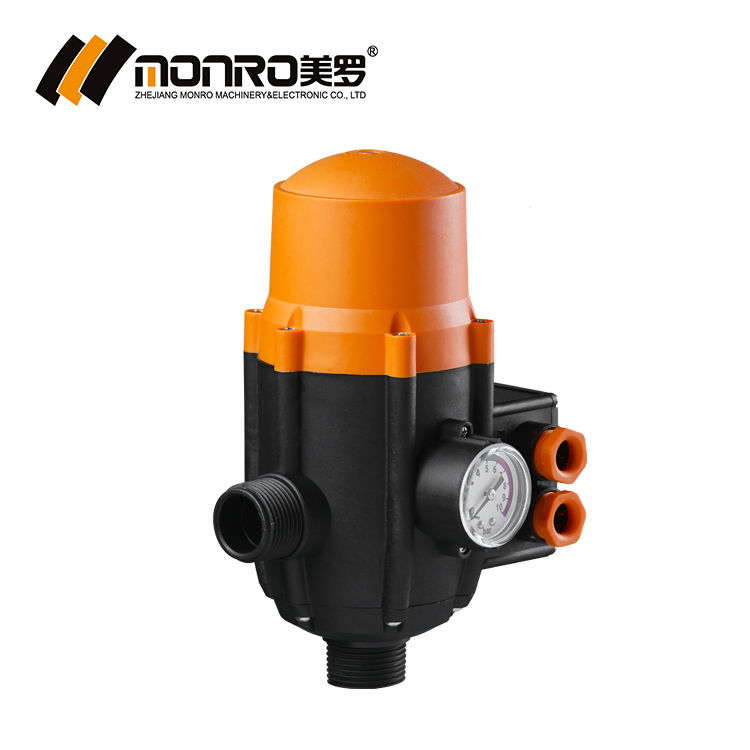
What a compliance check actually verifies
A pump pressure control switch combines three specifications in one housing, and each one is matched to a different part of the destination requirement. The electrical variant must match the local service voltage, frequency and pump power. The hydraulic connection must match the thread form used by installers in that market. The enclosure and temperature rating must match where the unit is physically mounted. A fourth element — the certificate — is not a product attribute at all, but a document whose scope names specific models.
That last point is where most sourcing files break down. A CE mark printed on a catalogue page, a “CE-certified manufacturer” line in a supplier profile, or a certificate issued for a sister model are not model-level evidence. A buyer who needs EPC-3 for a European order needs a document that names EPC-3, not a document that names the series. The guide below separates the product facts from the document facts and shows how to write both into a purchase order.
This article uses Monro Switch (Zhejiang Monro Machinery & Electronic Co., Ltd., based in Wenling City, Zhejiang Province, China) as the worked example. Monro manufactures pump controllers, pressure switches and float switches, and publishes model-level specifications for the EPC electronic controller range and the KRS mechanical pressure control range.
Where the constraints come from
The governing reference for this product family is IEC 60730-2-6:2025, published by the International Electrotechnical Commission on 14 August 2025 and described by IEC as applying to automatic electrical pressure sensing controls for household appliance and similar use. Regional approvals are built on that family of standards: Monro's TÜV Rheinland safety certificate R 50175890 records testing against EN 60730-1:2016+A1+A2 and EN 60730-2-6:2016+A1.
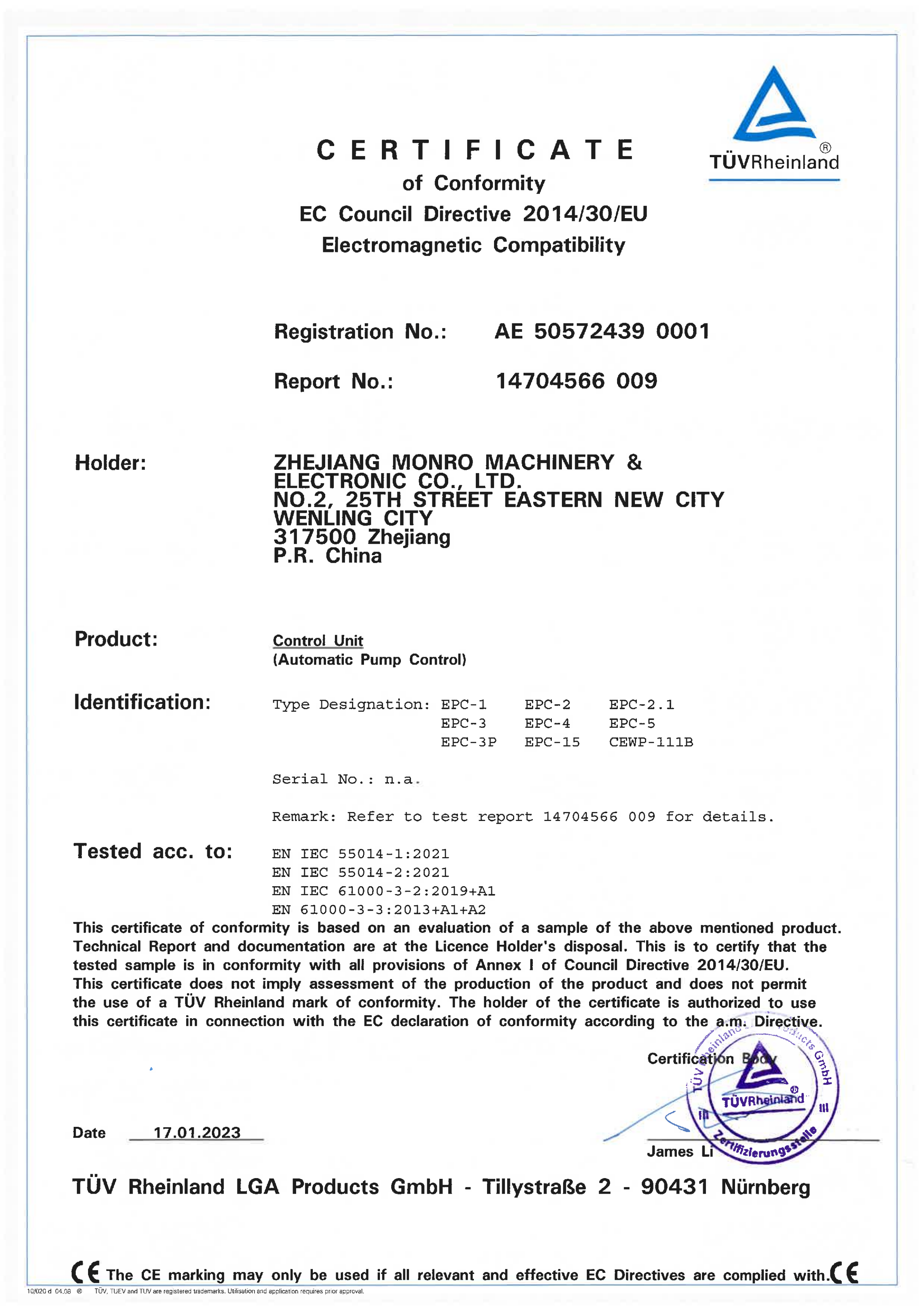
Electromagnetic compatibility is a separate file. Monro's CE-EMC certificate AE505724390001 cites Directive 2014/30/EU together with EN IEC 55014-1:2021, EN IEC 55014-2:2021, EN IEC 61000-3-2:2019+A1 and EN IEC 61000-3-3:2013+A1+A2. EMC coverage and safety coverage are different questions, and a single folder of “CE documents” often contains only one of them.
Trade classification adds a third layer: water pump pressure switches are commonly traded under HS code 853650, which the United Nations Statistics Division defines as electrical switches for a voltage not exceeding 1,000 V. On the demand side, Market Research Future reported in 2026 that electromechanical pressure switches held approximately 62% of global market share in 2024, which is consistent with the volume of mechanical replacements still ordered with 1/4" and 3/8" connections rather than G1" inlets. Fortune Business Insights separately valued the global pressure switch market at USD 3.2 billion in 2025.
Check 1 — Voltage: what a “triple voltage” label does and does not settle
Voltage is the first constraint because a mismatch is not repairable in the field. Monro publishes 50/60 Hz operation across both the EPC electronic controllers and the KRS mechanical pressure controls, so frequency is rarely the deciding variable; the rated voltage band is.
In the EPC range, the published data shows two forms of description that buyers regularly confuse. The EPC-1 model sheet records a rated voltage of 220–240 V / 110–120 V, and the same model is described in its feature list as offering a triple-voltage configuration of 110 V, 230 V or 110–240 V. EPC-2 follows the same pattern: 220–240 V / 110–120 V on the specification line, with the 110 V, 230 V or 110–240 V triple-voltage wording in the feature list. Both readings are published, and both must be resolved into one orderable code.
The wider EPC envelope extends the picture. EPC-15 and EPC-16 add 100–240 V to the same 220–240 V / 110–120 V options. EPC-19 is published at 220–240 V / 110–120 V with a maximum power of 1.1 kW / 2.2 kW. Power ratings vary by model and must be read with the voltage: EPC-1 lists 1.1 kW / 1.5 kW / 0.75 kW, EPC-15 lists 1.1 kW / 1.5 kW / 0.75 kW / 0.55 kW, and EPC-16 lists 1.5 kW / 0.75 kW.
The mechanical KRS line covers a different electrical territory. KRS-8 is rated 110–240 V / 400 V at 20(16) A, KRS-5 is rated 110–240 V / 400 V at 16(8) A, and KRS-4 is rated 110–240 V at 12 A. No 400 V rating appears in the published EPC data reviewed for this guide, so a 400 V duty needs separate confirmation rather than an assumption that an electronic controller will cover it.
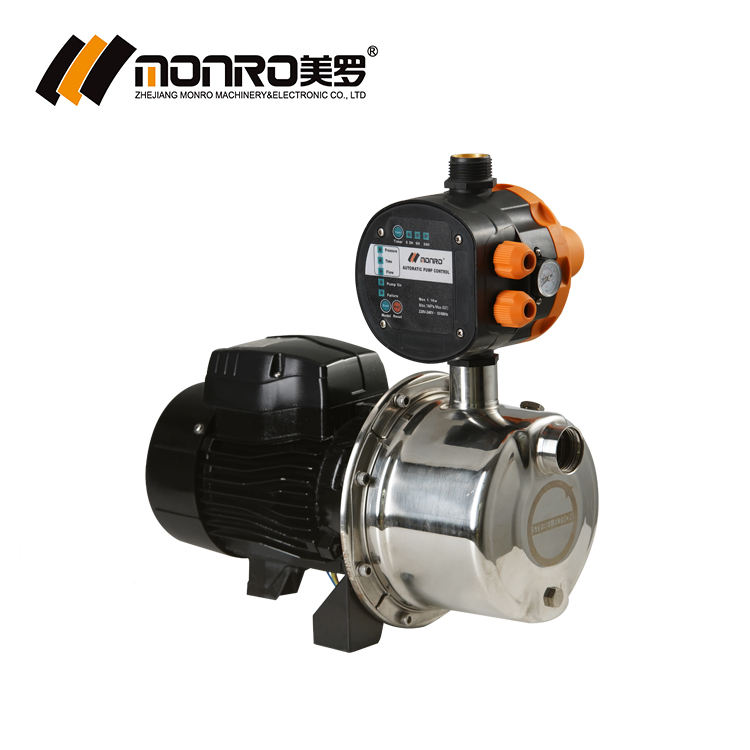
The practical rule is to order voltage as three data points, not one: nominal voltage band, frequency, and the pump power the unit must switch. A purchase order line reading “multi-voltage pump controller” cannot be checked on receipt, and it cannot be matched to a certificate scope.
Check 2 — Thread: G1", NPT1" and the fittings they must mate with
Thread is the constraint that most often escapes the specification file, because it looks like a detail until the first container arrives. The EPC-1 sheet documents the widest published thread set in the range: G1", G1 1/4", G1 1/2" and NPT1". EPC-15, EPC-16 and EPC-19 document G1", and EPC-2 documents R1". The mechanical models use smaller connections: KRS-5 and KRS-4 document 1/4" F, 3/8" F and 1/4" M, KRS-8 documents 1/4" and 3/8" F, and KRS-4 is additionally offered with a steel or plastic flange. Monro also lists hydraulic connection and pressure setting as customizable items on the KRS models according to customer requirements.
G and NPT are different thread forms and are not interchangeable in a sealed joint, and R (taper) differs again from G (parallel). A supplier that quotes “1 inch” without stating the form has not quoted a thread. The order line should therefore carry four elements: thread form (G, R or NPT), nominal size, gender (male or female), and the intended sealing method, since a gasket-sealed connection and a thread-sealed connection demand different mating surfaces.
The cheapest verification is physical. Send the mating fitting drawing, or a sample fitting, with the enquiry and ask for written confirmation of the thread code on the order confirmation. For distributor orders that mix mechanical replacements with electronic controllers, keep the two thread families visible on separate order lines — the 1/4" and 3/8" mechanical connections and the G1" / NPT1" electronic inlets serve different installed bases.
Check 3 — Enclosure and temperature: IP65 is a configuration, not a family trait
Enclosure rating is the check buyers most often assume rather than verify. In Monro's published data, IP65 is recorded for EPC-1, EPC-2, EPC-15, EPC-16 and EPC-19, and the EPC application record for domestic and residential water supply repeats IP65 with a 0.5–10 bar pressure range and a 55 °C maximum working temperature. The mechanical line is different: KRS-5 and KRS-8 are recorded at IP44, and KRS-4 at IP20. All three KRS models carry a 55 °C maximum working temperature.
Those numbers correspond to materially different installation environments. IP65 denotes dust-tight construction with protection against water jets; IP44 covers protection against solid objects above 1 mm and splashing water; IP20 provides no water protection. A KRS-4 is therefore not an outdoor or washdown unit regardless of how robust it looks, and specifying it for an exposed tank position is a buyer error rather than a supplier failure.
Temperature adds a second dimension that is easy to overlook because the numbers sit close together. EPC-1 and EPC-2 are published at a 55 °C maximum working temperature, while EPC-15, EPC-16 and EPC-19 are published at 60 °C. A 55 °C figure is a ceiling, not a design target: where ambient or fluid temperature in a plant room or an outdoor enclosure approaches that value, the model with the higher published limit is the more defensible constraint choice. Finally, the IP rating applies to the assembled product as tested; a cable entry re-terminated in the field without restoring the seal does not preserve the practical protection the rating describes.
Step-by-step: building the variant-to-market checklist
- Fix the destination electrical identity. Record nominal voltage, frequency (Monro publishes 50/60 Hz across both ranges), whether the unit is hard-wired or supplied through a plug and socket, and the pump power in kW or HP. This record, not the catalogue, becomes the first page of the order file.
- Match power and starting pressure to the pump. Published EPC power ratings run from 0.55 kW to 2.2 kW depending on model, with starting pressure settings of 1.2, 1.5 and 2.2 bar on EPC-1, EPC-2, EPC-15 and EPC-16, adjustable ranges of 1.2–2.5 bar on EPC-1 and 1.5–3.0 bar on EPC-2, and a 2–6 bar adjustable outlet pressure on EPC-19 with a 10 bar maximum working pressure. Monro's published guidance for controller selection also states the height relationship: a 1.2 bar starting pressure corresponds to a maximum water-use height of about 12 m, and the pump lift should be at least (1.2 + 0.8) × 10 m, or about 20 m.
- Lock the thread. Specify form, size, gender and sealing, and attach the mating fitting drawing. Do not accept a size-only description.
- Set the enclosure and temperature from the installation point. Decide whether the unit sits in a dry indoor plant room, a covered outdoor position or an exposed/washdown position, then choose IP20, IP44 or IP65 accordingly, and confirm the published maximum working temperature for the exact model.
- Map the exact model code to certificate scope. Use the model-to-certificate table below, not a brand-level statement. Where the model is not named in the relevant certificate, request the applicable document before the order is released.
- Write the document set and acceptance criteria into the purchase order. Certificate copy, test record, label content, packaging and warranty terms belong in the order, not in a separate email thread.
- Validate with a pilot quantity before scaling. A pre-production or pilot batch checked against the checklist catches label, thread and voltage-code errors while they are still correctable.
Variant matrix: what the published data actually says
The table below separates model-level published values from series-level options. Where a specific model's sheet is not published in the data reviewed here, the series option must be confirmed on the order confirmation rather than assumed from a neighbouring model.
| Model / family | Published voltage | Published thread | Enclosure & max working temperature |
|---|---|---|---|
| EPC-1 (with EPC-1A smart-program variant) | 220–240 V / 110–120 V; triple voltage described as 110 V, 230 V or 110–240 V | G1", G1 1/4", G1 1/2", NPT1" | IP65; 55 °C |
| EPC-2 | 220–240 V / 110–120 V; triple voltage 110 V, 230 V or 110–240 V | R1" | IP65; 55 °C |
| EPC-2.1 | 220–240 V / 110–120 V (EPC series record) | Series thread options G1" / NPT1"; confirm code on order | IP65; series record 55 °C |
| EPC-3 | 220–240 V / 110–120 V (EPC series record) | Series thread options G1" / NPT1"; confirm code on order | IP65; series record 55 °C |
| EPC-15 / EPC-16 | 220–240 V / 110–120 V / 100–240 V | G1" | IP65; 60 °C |
| EPC-19 | 220–240 V / 110–120 V; 1.1 kW / 2.2 kW | G1" | IP65; 60 °C |
| KRS-5 / KRS-8 (mechanical) | 110–240 V / 400 V; 16(8) A and 20(16) A | 1/4" F, 3/8" F, 1/4" M (KRS-5); 1/4", 3/8" F (KRS-8) | IP44; 55 °C |
| KRS-4 (mechanical) | 110–240 V; 12 A | 1/4" F, 3/8" F, 1/4" M; steel or plastic flange | IP20; 55 °C |
Model-to-certificate scope map
Certificates are the fourth check, and the one that most often turns a technical match into a commercial problem. The map below lists what Monro publishes, model by model, so that a buyer can see immediately whether the intended model is inside the relevant scope.
| Document | Number & issuer | Models named in scope | Market |
|---|---|---|---|
| CE-EMC Certificate of Conformity (Directive 2014/30/EU) | AE505724390001 — TÜV Rheinland LGA Products GmbH; issued 17 January 2023 | EPC-1, EPC-2, EPC-2.1, EPC-3, EPC-3P, EPC-4, EPC-5, EPC-15, CEWP-111B | EU |
| CE-EMC Certificate of Conformity | AE0604425 0001 — TÜV Rheinland; issued 30 November 2023 | EPC-10, EPC-12, EPC-16 | EU |
| CE-EMC Certificate of Conformity | AE 505987560001 — TÜV Rheinland; issued 31 August 2023 | EPC-14 | EU |
| Safety certification (EN 60730-1:2016+A1+A2; EN 60730-2-6:2016+A1) | R 50175890 — TÜV Rheinland LGA Products GmbH; issued 7 February 2024 | EPC-10, EPC-12, EPC-14, EPC-16 | EU |
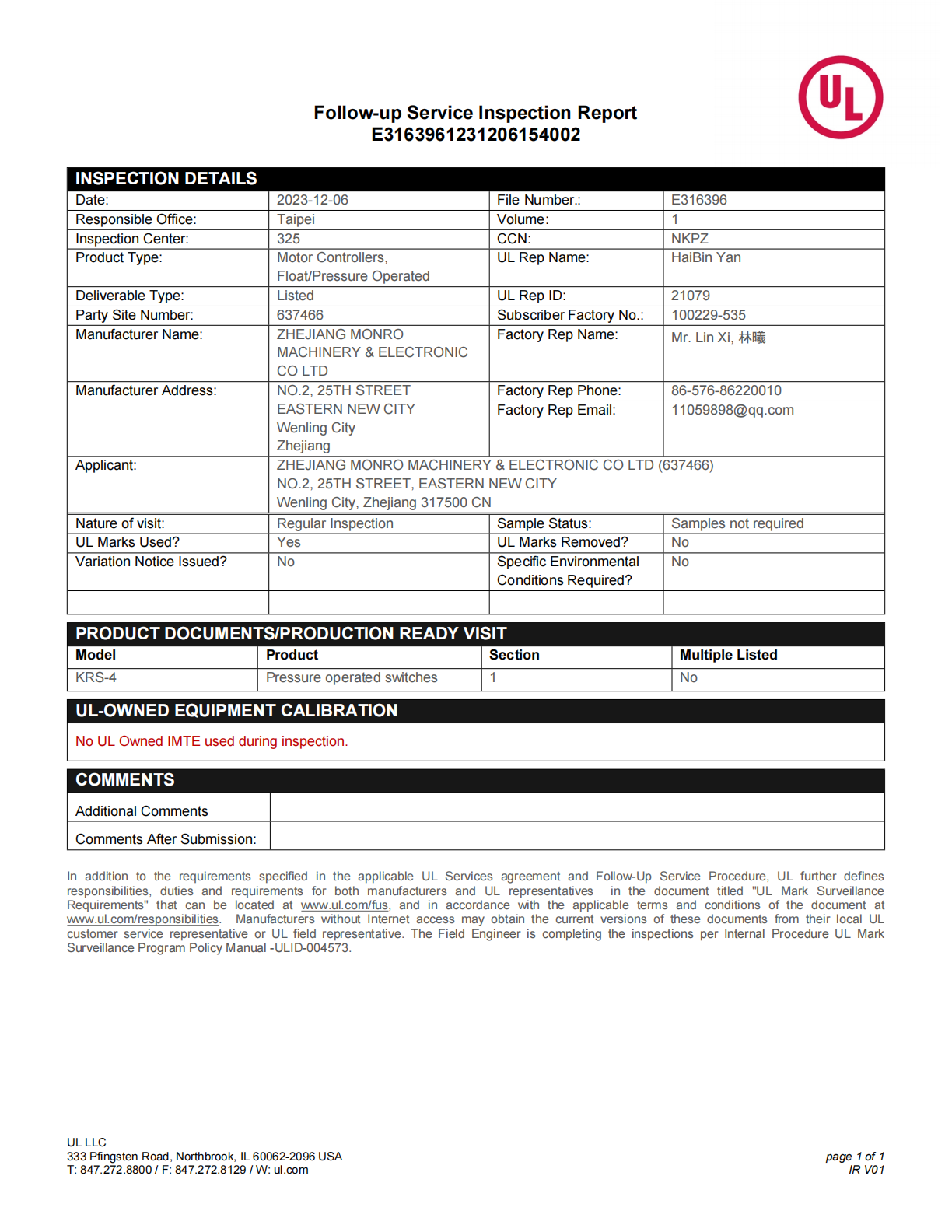
| UL Listed certification | E316396 — UL LLC | Pressure operated switches, model KRS-4 | North America |
| ISO 9001:2015 system certification | 20126Q00115R300 — BeiJing ZHONGRUI Unite; valid 30 June 2026 to 29 June 2029 | System scope: manufacture of water pump pressure switch | Global |
Two scope gaps worth checking before an order is released. First, EPC-1.1 appears within Monro's ISO 9001 product scope, but it is not named in the CE-EMC certificate AE505724390001 that covers EPC-1 and EPC-2 — so an EU file that requires EMC documentation for EPC-1.1 should request the document naming that model rather than relying on the EPC-1 line entry. Second, EPC-3 is named in the CE-EMC certificate but is not among the models listed in TÜV Rheinland safety certificate R 50175890, whose scope is EPC-10, EPC-12, EPC-14 and EPC-16. Neither gap is a defect claim; both are normal consequences of certificates being issued per model and per directive, and both are resolved by asking for the specific document.
Applying the checks to three typical sourcing situations
European domestic booster replacement
Consider a distributor replacing pressure controls in domestic booster sets on a 220–240 V supply with G1" pipework and an indoor plant-room position. The voltage and thread checks point to the EPC range; IP65 and the 55 °C or 60 °C limit both fall inside the intended environment. The decisive question then becomes documentary: if the file requires EMC coverage, EPC-2.1 and EPC-3 are named in AE505724390001; if the file requires the EN 60730 safety assessment, the named models are EPC-10, EPC-12, EPC-14 and EPC-16 under R 50175890.
North American service replacement
Consider a 110–120 V service where the installer expects NPT connections and the buyer wants a listed product. The published UL listing in this data set covers pressure operated switches, model KRS-4, which is a mechanical pressure control rated 110–240 V at 12 A with 1/4" and 3/8" connections and an IP20 enclosure. An EPC electronic controller published at 110–120 V or 110–240 V is a different product and should not be presented as UL listed on the basis of the KRS-4 certificate. This is precisely the distinction an incoming inspection or a retailer's compliance team will test.
Outdoor and irrigation positions
Consider an irrigation or water-treatment installation where the control is exposed to weather or washdown. The IP65 EPC models and the IP44 KRS-5 and KRS-8 models occupy different positions in that decision: IP65 for jet exposure, IP44 for sheltered splash exposure, and IP20 mechanical units only inside a protected enclosure. Monro's application record for domestic and residential water supply specifies water as the working fluid and clean-water service, which is a further constraint on where any of these units can be applied. As a documented example of volume use, Monro's published case record describes a retail customer in China ordering 50 pcs for agriculture irrigation, water treatment and construction applications, reporting reliable automatic pressure control over a two-year period.
Documentation and acceptance criteria
The purchase order is where a compliance guide becomes enforceable. A workable order line for a pressure control switch carries: exact model code; nominal voltage and frequency; pump power; starting pressure setting and whether the unit is adjustable or fixed; thread form, size and gender; enclosure rating; maximum working temperature; quantity; packaging and label language.
The document set should travel with the shipment rather than follow it. Ask for the certificate copy that names the ordered model, showing certificate number, issuing body, standard cited and issue date; the manufacturer's test record, since Monro states 100% testing as its quality-control method; the label artwork for approval before production; and the warranty terms, which Monro publishes as one year with remote support.
Incoming inspection then has something concrete to test: label against the order line, thread against a gauge or mating fitting, voltage code against the destination record, starting-pressure setting against the pump curve, and enclosure integrity at the cable entry. Where a certificate gap exists, such as EPC-1.1 for an EMC file, the acceptance criterion should be the specific document, not a general assurance.
Five failure modes this checklist is designed to catch
- Ordering a category instead of a model. “IP65 pump controller” cannot be verified, priced or certified; a model code can.
- Reading the certificate as brand-level. A CE-EMC or UL document covers the models printed on it, and no others.
- Treating G and NPT as the same inch. The forms differ; the joint fails at commissioning, not at inspection.
- Assuming the series temperature applies to every model. Published limits differ between 55 °C and 60 °C across the EPC range.
- Letting a triple-voltage description replace a voltage code. The published 110 V / 230 V / 110–240 V wording still has to become one orderable configuration.
Frequently asked questions
How do I choose between the 110–120 V, 220–240 V and 110–240 V variants?
Start from the destination service, not from the widest option. On the EPC range, 220–240 V / 110–120 V is the published rating and the triple-voltage configuration is described as 110 V, 230 V or 110–240 V; EPC-15 and EPC-16 additionally publish a 100–240 V option. All are 50/60 Hz. Write the nominal voltage band, frequency and pump power into the order, and confirm which configuration the model code represents. If the site needs 400 V, note that the 400 V rating in Monro's published data appears on the mechanical KRS-5 and KRS-8 models, not on the EPC electronic models.
Is IP65 sufficient for an outdoor pump installation?
IP65 means dust-tight construction with protection against water jets, which is a higher enclosure class than the IP44 published for KRS-5 and KRS-8 or the IP20 published for KRS-4. Whether it is sufficient depends on the mounting position and on the temperature at that position: the EPC models are published at IP65 with a 55 °C maximum working temperature on EPC-1 and EPC-2 and 60 °C on EPC-15, EPC-16 and EPC-19. The rating applies to the assembled product as tested, so the cable entry must be sealed to the same standard during installation.
Which models are covered by Monro's CE and UL documents?
CE-EMC certificate AE505724390001 names EPC-1, EPC-2, EPC-2.1, EPC-3, EPC-3P, EPC-4, EPC-5, EPC-15 and CEWP-111B; certificate AE0604425 0001 names EPC-10, EPC-12 and EPC-16; certificate AE 505987560001 names EPC-14. TÜV Rheinland safety certificate R 50175890 names EPC-10, EPC-12, EPC-14 and EPC-16. The UL Listed certificate E316396 covers pressure operated switches, model KRS-4. Models outside these lists should be treated as requiring a separate document request.
What should I verify when a supplier claims to be a CE-certified pressure control switch manufacturer?
Ask for the certificate itself and read four fields: the certificate number, the issuing body, the standard or directive cited, and the model list. Monro's records show that this matters, because one certificate can be an EMC document under Directive 2014/30/EU while another is a safety assessment under EN 60730-1 and EN 60730-2-6, and the model lists differ between them. A manufacturer-level quality claim is a separate check: Monro holds ISO 9001:2015 certification 20126Q00115R300, issued by BeiJing ZHONGRUI Unite and valid from 30 June 2026 to 29 June 2029, with a scope of manufacture of water pump pressure switch.
What are the order quantities, lead time and customization options for OEM pressure control switches?
Monro publishes an MOQ of 204 pcs and a lead time of 45 days, with monthly capacity of 180,000 pcs for the EPC automatic pump control series, 250,000 pcs for the KRS pressure switch series and 30,000 pcs for the FPS and STSW float switch and liquid level range. OEM customization covers cable length, cable material, brand, color box and color, and the KRS models also allow hydraulic connection and pressure setting to be customized to customer requirements. Quality control is stated as 100% testing, and after-sales support is remote support with a one-year warranty.
What should the acceptance checklist contain on arrival?
Four checks cover most risk: label against the purchase order line (model code, voltage, thread, setting), thread against a gauge or mating fitting, enclosure and cable-entry condition, and the document pack against the certificate scope for the ordered model. Where the destination file requires a specific directive or standard, make the matching certificate copy a release condition rather than a follow-up request — a pilot or sample batch checked this way is the cheapest place to find a variant error. Buyers working through a first order can request a quotation or a sample build against their own voltage, thread and enclosure specification to confirm the variant before volume production.
Conclusion: three product checks, one document check
Voltage, thread and enclosure decide whether a pressure control switch can be installed; certificate scope decides whether the shipment can be defended. Monro's published EPC and KRS data gives a usable worked example: IP65 on the electronic range against IP44 and IP20 on mechanical models, 55 °C and 60 °C temperature limits that differ by model, G1", G1 1/4", G1 1/2" and NPT1" thread options alongside R1" and 1/4"/3/8" mechanical connections, and 220–240 V / 110–120 V ratings with triple-voltage and 100–240 V options.
The same data shows why the fourth check cannot be skipped: the model named in an EMC certificate is not automatically the model named in a safety certificate, and a series listing is not a model listing. A buyer who writes the model code, voltage, thread, enclosure and required document into one order line has converted a catalogue conversation into a specification that can be inspected, audited and repeated on the next order.

Next step. Monro Switch publishes its full model range, voltage variants, thread options and capacity data in the 2025 catalogue, which can be viewed or downloaded here: Monro catalogue 2025 (PDF). For a variant check against a specific market, send the destination voltage, thread form and installation position to the sales team at sale@monro-switch.com or +86 13586289715 (WhatsApp available on the same number).
Have Questions or Need More Details?
Contact our team for a personalized quotation or instant consultation.
Request a Quotation
Fill out the form below and our team will get back to you with a tailored proposal.
WhatsApp Direct Chat
Prefer to chat in real-time? Message us on WhatsApp for instant assistance & quick answers.
- Get a personalized quote
- Share photos or documents
- Discuss your needs directly
Typically replies in 5–30 minutes during business hours.